Wednesday, 17 September 2014

'Wings of Glory' Historical Air Picnic, Saturday 13th September 2014, Sobienie-Jezioro, Poland


Click on photographs to enlarge - far superior rendition

                                                                                                                                                             (BZ)


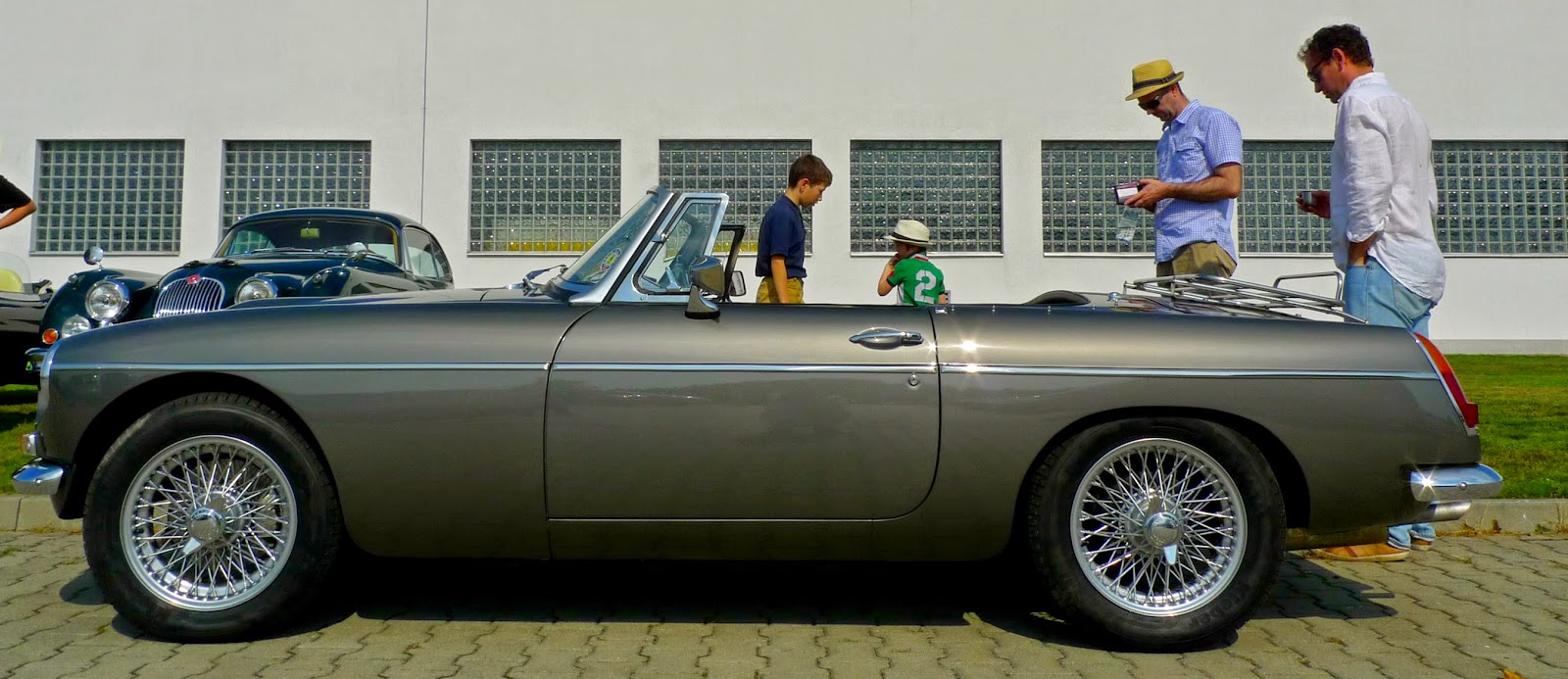
We had an excellent day with a lovely display of 8 of our cars one of which was Andy Fincham’s superb recently restored MGC which he had been driving for a full 12 hours after delivery. He came up trumps and appeared!  

The vintage air show  and pic-nic were in brilliant sunshine. One of the closest days to 'an English event’ I have yet attended in Poland and superior in some respects. Of course we all all know Poles are among the most brilliant of pilots – the Spitfire, Hurricane and Bomber Command record we are familiar with but we should not neglect the extraordinary resistance and magnificent and valiant flying in outclassed PZL P11 fighters against the superior Luftwaffe machines at the outbreak of WW II. A truly great and heroic story too often overlooked. 


A PZL P11 fighter 

The above is the sole surviving fighter from the Polish Air Force of 1939. The P.11c was the main production variant of the 325 built. Polish serial '8.63'. c/n 562. It is now on display taking pride of place in the new entrance building at the Muzeum Lotnictwa Polskiego in Krakow. 


The following is taken from the museum's website:- 

"In the last months of 1927, the Department of Aeronautics commissioned to the Central Aviation Works (which were renamed the State Aviation Works in 1928), the design of a fighter which could be a follower of the commonly used, SPAD aircraft. The work over the new airframe was started by Zygmunt Puławski. The first from the family of Puławski aircraft drew international attention. Next, came the P.6 and the P.7. Again both arose interest in foreign constructors and were awarded at the international air shows. In 1930, the Department of Aeronautics commanded to design a predecessor for the P.6 and the P.7. 

The new, P.11 fighter was a single seat, all metal, upper wing aeroplane with fixed undercarriage. The aircraft featured original technical and technological solutions. The first, was the Wibault metal corrugated skin covered wing, having an unusual shape and construction, enabling to gain low weight, high durability, good aerodynamics features and an excellent front and side visibility. This unconventional solution, called abroad the "Polish wing" or "Puławski's wing" gave a gull wing shape to the wings. Another feature was a scissors type undercarriage with shock absorbers buried inside the fuselage. Worth mentioning was also the semi - monocoque fuselage construction used earlier in the P.7 fighter and (dropped in case of fire) the main fuel tank. 

The work of Zygmunt Puławski, (who died while test flying his new construction) was continued by Wsiewołod Jakimiuk. The prototype of the P.11 was test flown in 1931, by Bolesław Orliński. Displayed in 1934, at the Paris Air Show it aroused big interest among specialists. A technologically advanced, contemporary construction, it possessed excellent flying characteristics and a formidable performance. Fifty of the P.11a, were produced for the Polish Air Force and fifty of the P.11b (powered with the Gnome-Rhone 9K engine) for export to Romania. The PZL P.11c, powered with the Mercury IV S2 engine, flew for the first time in summer 1934. In comparison with earlier versions, it featured an improved flight stability, better cockpit visibility and increased fire power. In total, 175 P.11c fighters were built in Poland. Tests with naval, winter (with skis) and dive bombing versions were also carried out, but didn't come beyond the study phase. The engine was then changed for the Gnome-Rhone Mistral. 

The aircraft in this configuration served as the sample for the licence built P.11f. Seventy aircraft of that version were produced at the Romanian IAR Works. In autumn 1936, the Spanish republican government made efforts to buy 36 airframes, but because of the Polish declaration of neutrality, this transaction was not finalised. The followed type, the P.24 was the last of the family of these aircraft. Armed with two cannons and two machine guns, it was considered as the fighter with the biggest fire power then. In 1937, with the introduction into service in other countries of the more modern, low wing fighters, the P.11 became obsolete. 

The PZL P.11c, was a basic fighter in service with the Polish Air Force in September 1939. It gave way to the new generation of aircraft, as the German Bf-109 was. However, thanks to the skills of the Polish pilots, the "eleveners" scored 120 enemy aircraft to their credit. The exhibit on display, flew with the 121st Flight of the 2nd Air Regiment in Krakow. Today, this aircraft is considered as the most precious exhibit at the Polish Aviation Museum, but not because of the material value. It is the only saved Polish fighter from the September 1939 campaign, the symbol of the Poland's lone struggle with the German Luftwaffe." (photo thanks to Alan Wilson - Aviation enthusiast)

I was very moved to see an excellently arranged and exciting event with fascinating Russian and Polish aircraft never seen in England. Superb restorations which are horrendously expensive. Great atmosphere. The acrobatic display was quite incredible. Such manoeuvres are rarely seen at public displays. 


I used to go to the Duxford Air Show in Cambridgeshire and the Shuttleworth Collection regularly when living in London. This event in Poland (the first at this venue)  has great potential. Five even ten years ago this sort of event would have  been absolutely impossible to mount in Poland. This is all I can say. How the country is coming on….amazing really.

As ever I will allow the photographs and captions do the talking.


Some of the CCC cars at the event  (MM)
From an email sent by one of our particularly outspoken and well-informed CCC members: 
"The plane in the picture is a Soviet Po-2, a piece of shite which we had to produce after the war in order to experience the full humiliation of making something that was inferior to our prewar designs."  (BZ)

                                                                                                                                                           (MM)


A glass is raised by your 'Captain' and Andy Fincham to celebrate the completion of the Rzepecki company's fine restoration of Andy's MGC .
                                          The TR 6 of Paul Ayre hovers in the background                                   (MM)


Andy elucidating those finer points of arcane MG lore known only to MG drivers  (BZ)

The MGC - superb gunmetal/pewter metallic colour  (MM)
       
Everything open with Iain Batty attempting a dignified exit or any exit as it seemed at the time!    (MM)


Dashing, handsome and happy is our erstwhile Fincham...Andy Fincham  (MM)


The magnificent Stearman replica  (MM)

Robert Mathews, another of our expert aviation CCC members resident in the UK, tells me that for the crashes during the filming of The English Patient a half-scale Stearman replica was used
(see picture below)
He continues in his email:
'To be hypercritical of the film, no Stearmans were in private possession before WW2.'

You know for a small car club we have an extraordinarily well-informed and talented membership.
Just consider the quality of the Bristol Hotel Dinner Lectures...


The Stearman in flight  (MM)

Candy floss at such an advanced age!
Amazing isn't it how some people (such as loyal Mr. Booth) find it so difficult to grow up.
Certainly a fun way (apart from driving classic cars) to reclaim your youth!     (MM)

More relaxed and less people than at Duxford - the blessings of Poland as it discovers...  (MM)

Breathtaking acrobatics   (MM)

'Just look at that!'  Blazej, Kaja and Ian Booth in full pic-nic mode  (MM)


                          The magnificent Jaguar XK 150S of Janusz Z who also generously joined our party.  (MM)


                                                                                            The enigmatic Kaja in the E-Type                    (BZ)


                                                                                                 My 1949 MG TC                                     (BZ)


                                                                                                                                                                                     (BZ)


           A DHC-1 deHavilland Chipmunk powered by an Australian engine leads a line up of classic aircraft                                                                                                               

                                                                                                                                                                                
                                                      Note Ian Booth's Rover SD1 at the end of the row   (BZ)


                                                             The futuristic dashboard of the Rover SD 1     (MM)


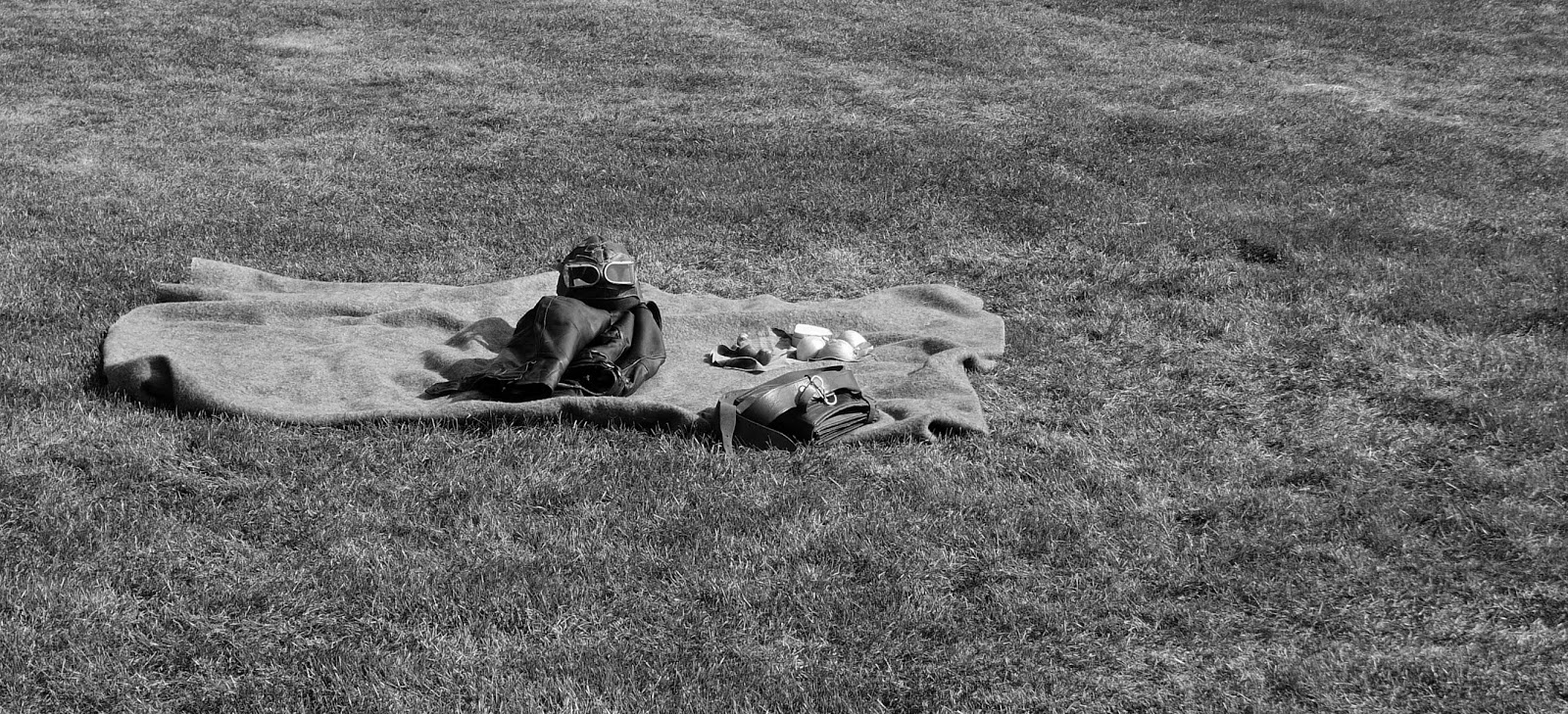
                    My 1949  MG TC in full picnic mode. Note original tool roll displayed on pic-nic rug         (MM)                                                                                                                                          


Nifty little tables on a ground spike to prevent precious wine from feeding the grass as far too                                   often happens on picnics! Cannot remember where I bought them, sorry.      (BZ)                    


                            The Stearman on its second flight of the afternoon - the best picture of the group   (BZ)


Time for a spot of lunch at the Sobienie Krolewski Golf Club 
Mirek Staniszewski with his wife Marzena and Artur Gabor head off  in the Fiat 124


                                                                        Blazej and Kaja prepare to leave in the E-Type


'Easy does it!' Negotiating the high kerb in the low-slung Ferrari 328. 
             That blessed kerb prevented some of us parking on the grass!   (MW)                


And so we made our exhilarated and weary way home through a lovely late summer afternoon. September is one of the finest months in Poland. En route I stole a few redundant apples - a highly controversial fruit in Poland and Russia just now - from an orchard along the way.


                                                                                            Michael Moran (Chairman CCC)

Friday, 11 July 2014

Dinner Meeting of the CCC at the Bristol Hotel, Warsaw June 25th 2014


Click on Photographs to enlarge - far superior rendition


Dinner in the Slowacki Salon during Blazej Zulawski's excellent presentation of the
2014 Villa d'Este Concours d'Elegance

We managed to achieve an attendance of 13 for the Summer Dinner Meeting before members head off for their holidays to all points of the compass. The superstitious among us insisted on a 14th empty place being set!

These dinners have become a real education in terms of serious even encyclopaedic historical car knowledge and input from all the members present.

I have been to many such evenings at one marque car clubs in the UK (the R-REC, the MGCC and the Lagonda Owner’s Club) for example and although the material is of course is fascinating it is by necessity specialist and restricted in range to one manufacturer. We have been privileged to hear some quite extraordinary and esoteric presentations over a wide spectrum of automobilia since we began these Bristol Dinners. Last night was no exception. 

I sometimes feel the essential value of the CCC is the fact we are not restricted to one marque which makes for imaginative and stimulating evenings that range widely in scope and content. Quite apart from the immense learning curve we have all decided to embrace…very stimulating indeed.

During the meal we had a remarkably valuable and surely unique detailed presentation of this year’s stunning Villa d’Este Concours d’Elegance by professional photographer Blazej Zulawski. Apart from possibly the organizers of that event I simply cannot imagine such brilliant photography and informed commentary covering the entire exhibition being presented over a civilised dinner in a beautiful private room (the Slowacki Salon) in an historic hotel (the Bristol) in a capital city (Warsaw) anywhere else in the world – this is not an exaggeration.  Can you? Some 350 photographs of amazing and rare works of automobile art. The reason is Blazej's abiding passion for cars coupled with great aesthetic sensitivity – rare enough today.

Here is a selection of his photographs of the event:

Blazej Zurawski (left at the end) hard at work identifying these ultra-rare exotic machines

The shore of Lake Como where the Villa d'Este Concours d'Elegance takes place. Billionaires travelling...

The Judges

Matched set of Purdey shotguns in the rear of a unique Hooper-bodied Rolls-Royce Silver Cloud Shooting Brake. They would probably be valued higher than the car itself!


Having fun in a priceless Bugatti...

Sensual body details at Villa d'Este are certainly not restricted to motor cars


The glittering prizes


This presentation was then followed at the conclusion of dinner by a fluent and deeply fascinating talk by Paul Ayre (our club logo designer) of the evolution, design and influence of the Streamlined Tatras (Tatra V570, T77, T87, T97 ) by the visionary Austro-Hungarian or Austrian automobile designer and engineer Hans Ledwinka (1878–1967). In this talk Paul was playing in a fashion the Devil's Advocate for Ledwinka concerning the reputation for complete originality of some designs of Dr. Ferdinand Porsche. 

The illustrations brilliantly supported his contention that in car design all is not as clear cut as it might first appear. Clearly some very discriminating research was in evidence here. Streamlining itself was patented by the Hungarian-Jewish Viennese engineer Paul Jaray (1889-1974) who designed airships on which the Graf Zeppelins were based. Jaray founded the Stromlinien Karosserie Gesellschaft, which presented numerous designs for streamlined car bodywork. It issued licences to major vehicle manufacturers including the Tatra Works in Koprivinice in Czechoslovakia. Tatra was the sole manufacturer that introduced Jaray streamlining principles into their car production. 

Some of the most extraordinary images of cars I have ever seen was combined with esoteric information of a fascinating order. The beauty of the Tatra illustrative sales material was also amazingly beautiful and arresting. 

Both Hitler and Porsche were influenced by the Tatras. Hitler was a keen automotive enthusiast, and had ridden in Tatras during political tours of Czechoslovakia. He had also dined numerous times with Ledwinka. After one of these dinners Hitler remarked to Porsche, "This is the car for my roads". From 1933 onwards, Ledwinka and Porsche met regularly to discuss their designs, and Porsche admitted "Well, sometimes I looked over his shoulder and sometimes he looked over mine" while designing the Volkswagen. There is no doubt that the Beetle bore a striking resemblance to the Tatras, particularly the Tatra V570. 

The automotive designer engineer Hans Ledwinka  (1878-1967)
1933 Second prototype Tatra V 570 .  Does this shape remind you of any other vehicle?

First sketch of the VW Beetle

The automotive engineer Dr. Ferdinand Porsche (1875-1951)

First reveal of the German People's Car

This extraordinary photograph of Herr Hitler hunched over a model of the first VW car with a look of sheer excitement transfiguring his whey face along  with his Nazi cronies was worth coming to the dinner for alone. 
The influence of the Tatra designs by Hans Ledwinka is clear. 
Tatra T 77
Brilliant Tatra advertising material for their streamlined cars


Superb Tatra Logo

The extraordinary futuristic streamlined coachwork of the Tatra T 8

Brilliant Tatra graphic design


Extraordinary frontal treatment of the Tatra T 87 with central headlamp

The elegant interior of the Tatra T 87

Air-cooled V8 engine of the Tatra T 87

Advertising material for Tatra 603

Even buses seem to have been influenced by Tatra Streamlined cars.


1939 Leyland Cheetah Bus as featured in the UK TV Series Foyle's War
1939 Leyland Cheetah Bus (rear view with fin) as featured in the UK TV Series Foyle's War


This fantastic but impractical  (ultra heavy at 188 tons) design of the 1943 Panzer VIII Maus by Dr. Ferdinand Porsche was entirely new to me. Only 2 prototypes were built of which 1 is incomplete.

This is an interesting link to more detailed information on the Maus


Later we discussed possible future events. One was of mounting a car display in September at the Mielżyński Wine Bar, possibly matching wine to cars just for fun and perhaps other serious nonsense. 

As we left there was a glamorous party in full swing to celebrate the first anniversary of the opening of a branch of the Mielżyński Wine Bar at the Bristol Hotel.


A few of us joined the happy party group here after dinner...

Those CCC Members present at the dinner were:

Paul Ayre
Iain Batty
Paul Blackman
Jacek Czeczot-Gawrak
Andy Fincham
Michael Moran
Michael Motz
David O'Driscoll
Blazej Zulawski
Bill Flint
Guy Pinsent
Mirek Staniszewski
Artur Gabor


P.S.  By an odd and happy coincidence I visited a relatively unknown but excellent VW Museum in the Kaszuby region in the north of Poland while I have been writing this blog post on my holidays. It has been established by one family over many years and contains 40 VW cars of various models. They are presented in a particularly stylish manner. The collection of Combi vans is second to none. It is astonishing what one finds in remote parts of this country!


Volkswagen 181 Badge

VW Beetles from various years on manufacture


                          Volkwagen 181. This model was a two wheel drive, four door, convertible,off-road military vehicle
                     manufactured from 1968-1983. This one was from California where it was originally marketed as The Thing

Big Game hunting in a Volkwagen 181. 

She just stepped out for a moment...

Well do I remember this crazy time...carefree fun while it lasted!


www.vwmuseum.pl

ul. Armii Krajowej 50
83-330 Pepowo

Zenon Suchecki

www.garazhistorii.pl