Saturday, 1 May 2021

Invicta S-type low chassis - The Immortal British Sports Car - by Mick Walsh

A fine article concerning my favourite prewar British Sports Car
I managed to buy the magnificent book on the vehicle by Mark Riedner (N0: 393 of a limited edition of 500)


Traditionally, racing improves the breed, but Noel Macklin, founder of Invicta cars, had other ideas.

In the eyes of this wealthy, Eton-educated enthusiast, rallying was the best way to test and market the qualities of his impressive machines.

Key to their success was Donald Healey who, after giving up flying as too dangerous during the Great War, focused on European rallies for adventure.

Having done all he could with Triumph’s junior Super Seven, the determined Cornishman was looking for something more powerful.
Classic & Sports Car – Driving Donald Healey’s Monte-winning Invicta Low Chassis

Thanks to an introduction from Humphrey Symonds of The Motor magazine, who’d been impressed by Healey’s rally results, Macklin enlisted this perfect competitor to promote his Invicta cars on the toughest routes of Europe.

The association began in July 1930, when Macklin lent Healey a 3-litre ‘High Chassis’ tourer for the Alford Alpenfahrt, the maiden Alpine Trial.

After wringing the life out of the nimble 747cc Super Seven over the previous season, Healey relished the chance to drive a car with gutsy torque.

With cycle wings and twin spares fitted, Healey and his navigator drove out to Vienna and enjoyed every moment of the Alpine event with its superb hillclimb courses that included the mighty Grossglockner.
Classic & Sports Car – Driving Donald Healey’s Monte-winning Invicta Low Chassis

‘The Invicta was a marvellous car with light weight, impressive torque and acceleration. Far better than any of the opposition,’ enthused Healey, who beat local ace Hans Stuck in his Austro-Daimler.

Despite carrying two extra passengers including Professor Wolfbauer – ‘the largest man I’d ever seen in my life’ – Healey won the event outright and headed home to Perranporth with a magnificent trophy on the back seat, to be greeted by a euphoric civic reception.

Macklin and his team already had a spectacular new model, the famed S-type ‘Low Chassis’, nearing completion at the Cobham factory.

Encouraged by Healey ’s first victory, they tasked him with giving the new 4½-litre sports car its debut in the Rallye Monte-Carlo.
Classic & Sports Car – Driving Donald Healey’s Monte-winning Invicta Low Chassis

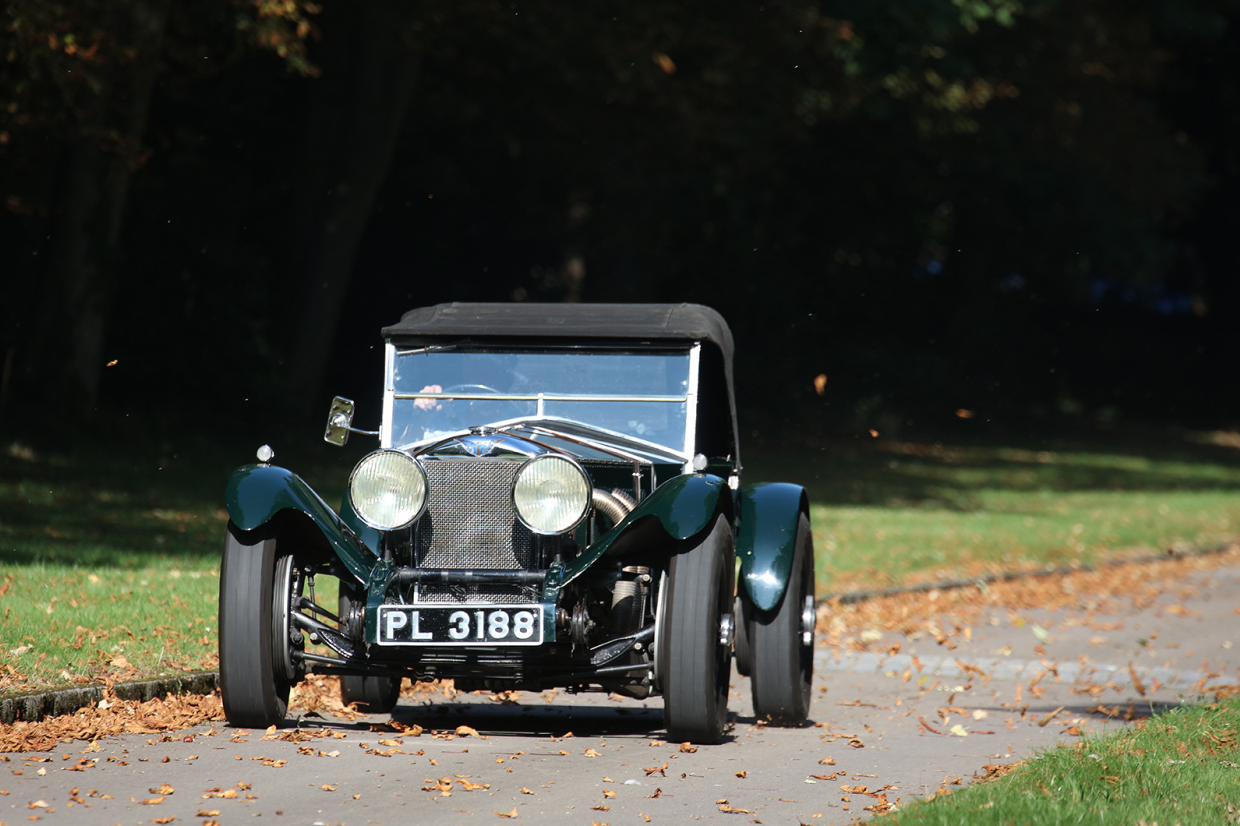
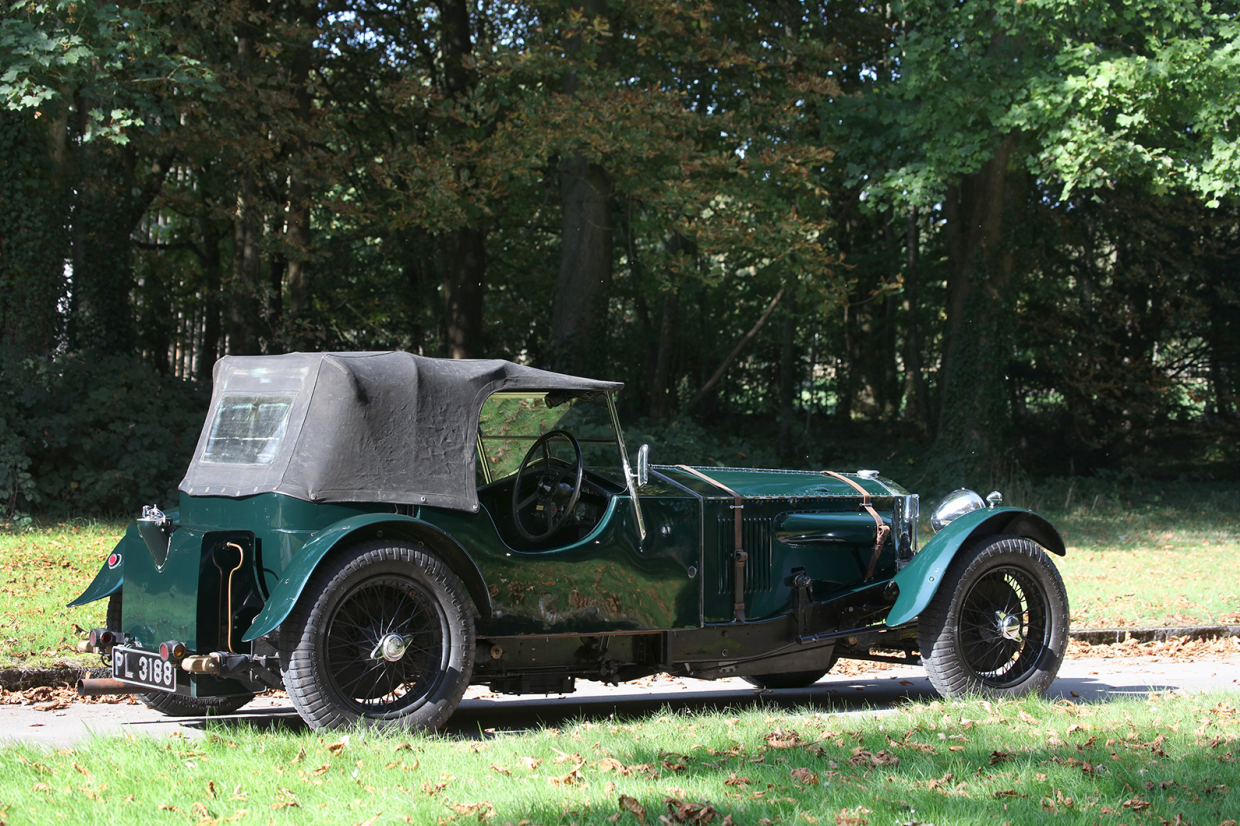
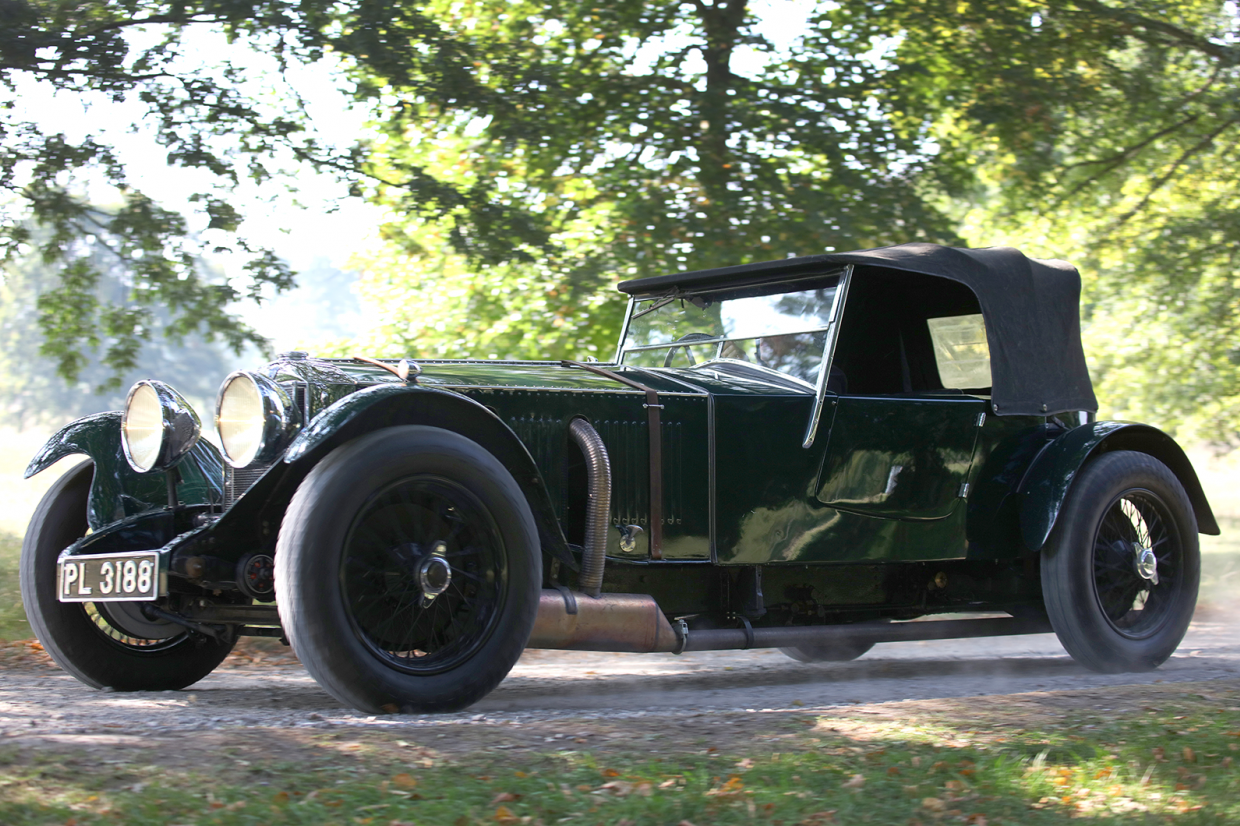
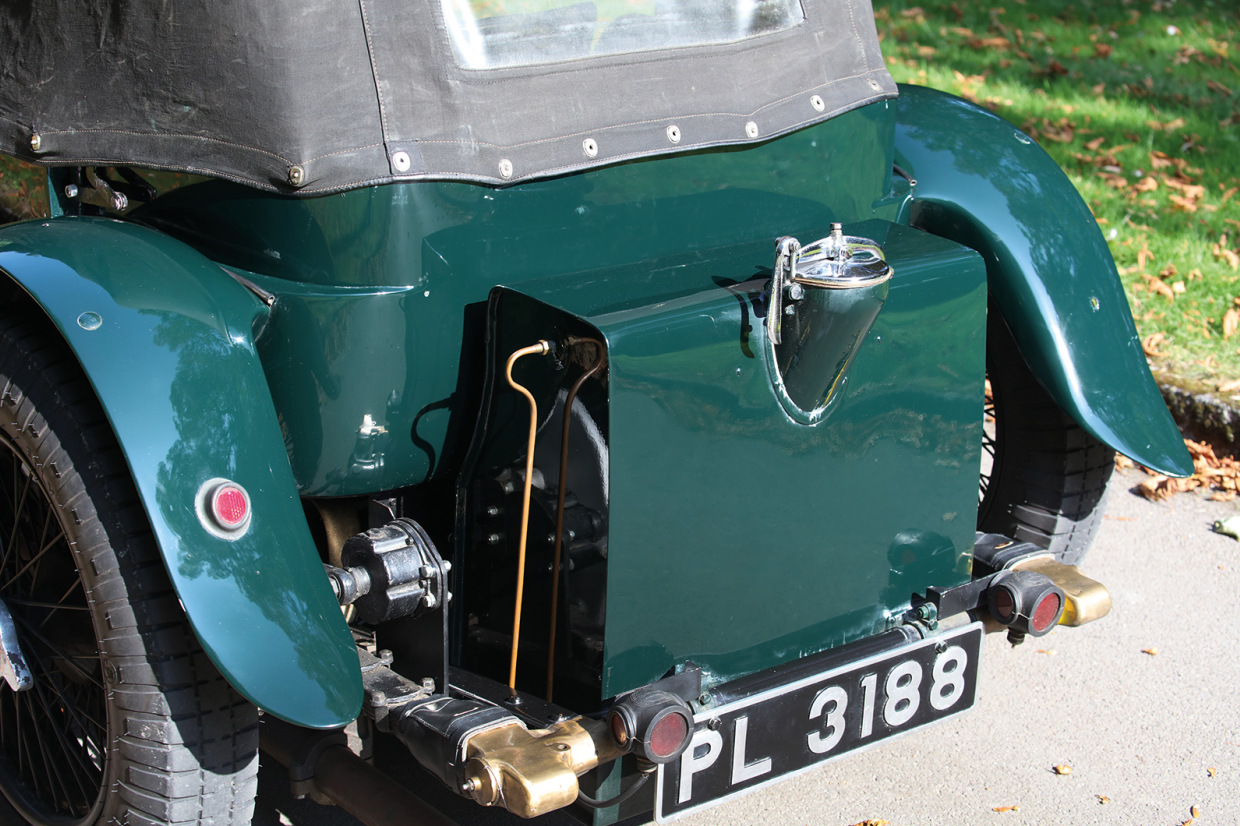
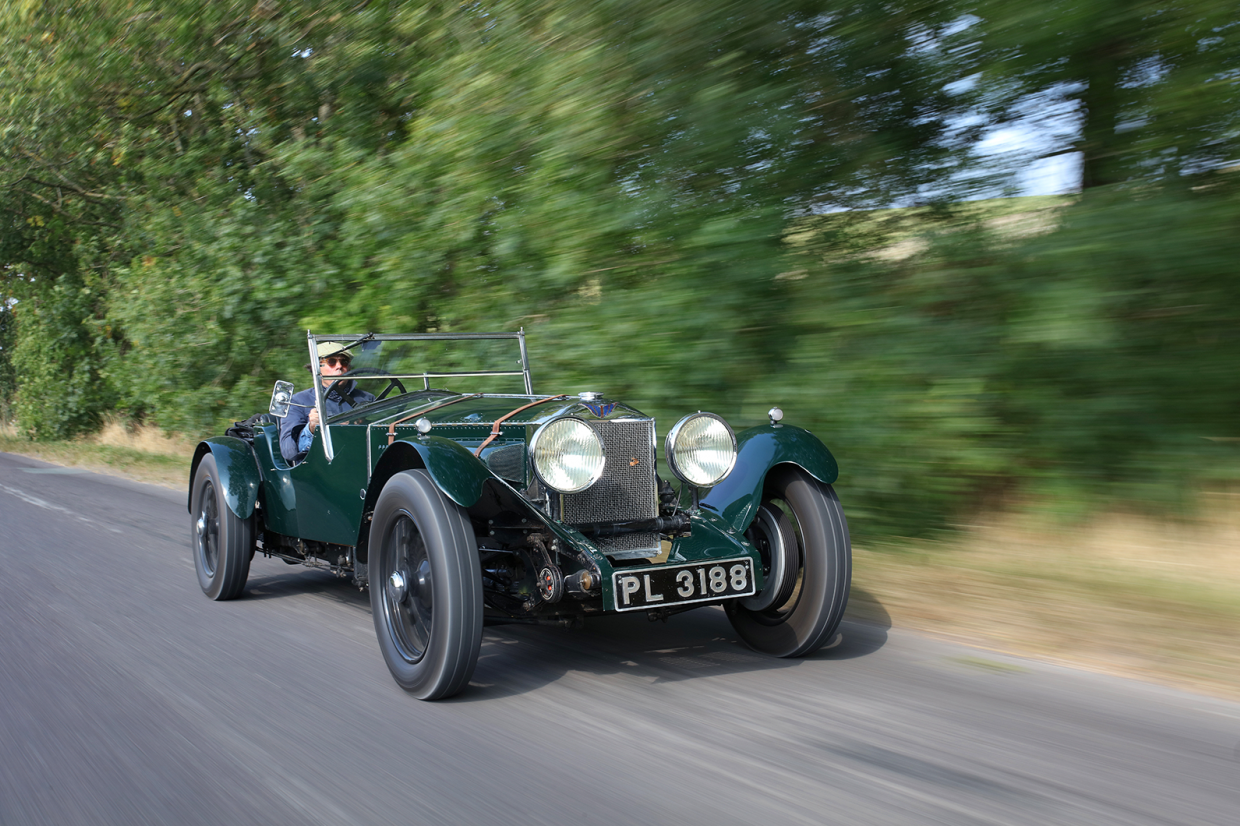
Chassis S48, registered PL 3188, was lent to Healey a few months before the January ’31 event.

To reduce weight, a special fabric-covered Weymann body was fitted, with open-joint construction to allow more flexibility over the rough roads and endless mountain hairpins.

Other modifications included amore comfortable passenger seat so main driver Healey could take a rest during the four-day and four-night enduro, while his passenger took the wheel for less challenging roads.

Concerned about the ground clearance of the stylish underslung design, Healey fitted larger wheels and higher cycle wings to give extra height over snow-covered and deeply rutted roads.
Classic & Sports Car – Driving Donald Healey’s Monte-winning Invicta Low Chassis

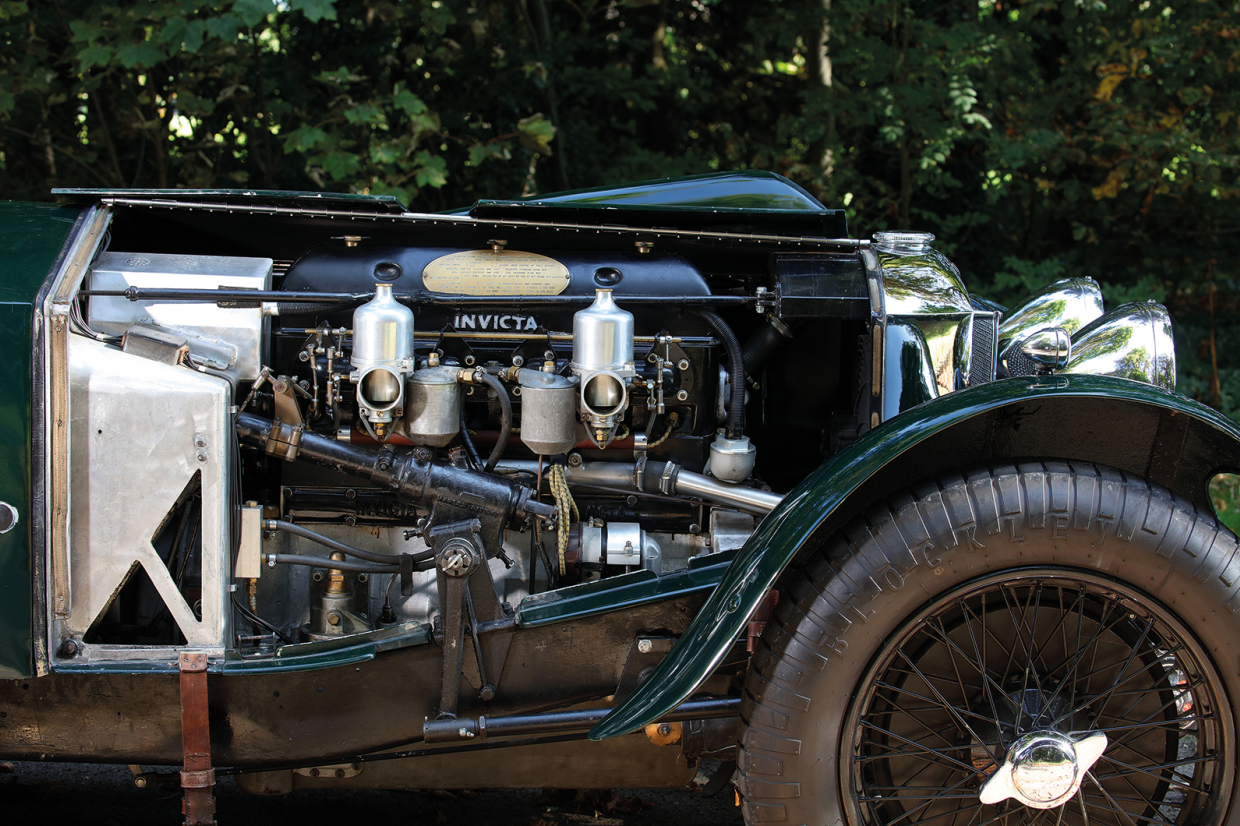
During testing around Cornwall, and driving back and forth between Perranporth and the Cobham factory, Healey was hugely impressed by the new S-type’s performance, in particular the low-speed torque of the Meadows straight-six engine.

The handling, however, gave him cause for some concern.

‘It had too much weight at the front unless it was balanced by a full fuel tank at the back,’ recalled Healey in his autobiography.

‘The transition from under- to over-steer was frightening, making the handling, even on a perfectly-conditioned road surface, more like driving on ice.’ Healey also found the ‘truck gearbox’ hard work.
Classic & Sports Car – Driving Donald Healey’s Monte-winning Invicta Low Chassis

In preparation for the final driving test, held on the promenade in Monte-Carlo, Healey set out a dummy wiggle-woggle course on adeserted Cornish road, following the diagram shown in the regulations.

Time after time he gunned the Invicta through the series of figure-of-eights, drifting around the pylons and charging in and out of the garage box until he could virtually do the test blindfolded.

For his crew, Healey selected journalist Symonds and Lewis Pearce. With the option of starts all over Europe, the team picked Norway – which required a significant winter drive to Stavanger even before the rally began.
Classic & Sports Car – Driving Donald Healey’s Monte-winning Invicta Low Chassis

The event boasted 147 entrants in diverse machines, ranging from 600cc DKW to 8-litre Rolls-Royce Phantom II, and attracted several Grand Prix drivers including Jean-Pierre Wimille in a sporty Lorraine Coupé.

The 1931 rally faced the most severe Monte weather, with 42 teams out before they’d even begun after failing to reach their chosen start points.

The Invicta was well prepared, with chains for the tall triple-stud tyres, and the crew fitted-out with one-piece high-altitude flying suits.

A short break upon arrival inSweden allowed the team to practice ice driving before heading south.
Classic & Sports Car – Driving Donald Healey’s Monte-winning Invicta Low Chassis

For the rally’s first 1000 miles, Healey stayed at the wheel as he faced heavy snow and treacherous ice, but when the roads straightened out he handed over to a teammate so he could take a rest.

Healey was abruptly awoken when the car slid off the road into a ditch and clouted an enormous telegraph pole, which cracked down on impact.

Thankfully none of the very shaken team was hurt but, after dragging the Invicta out of the ditch, they discovered that the rear axle had moved by 3in on the left-hand side and locked up the rear brakes.

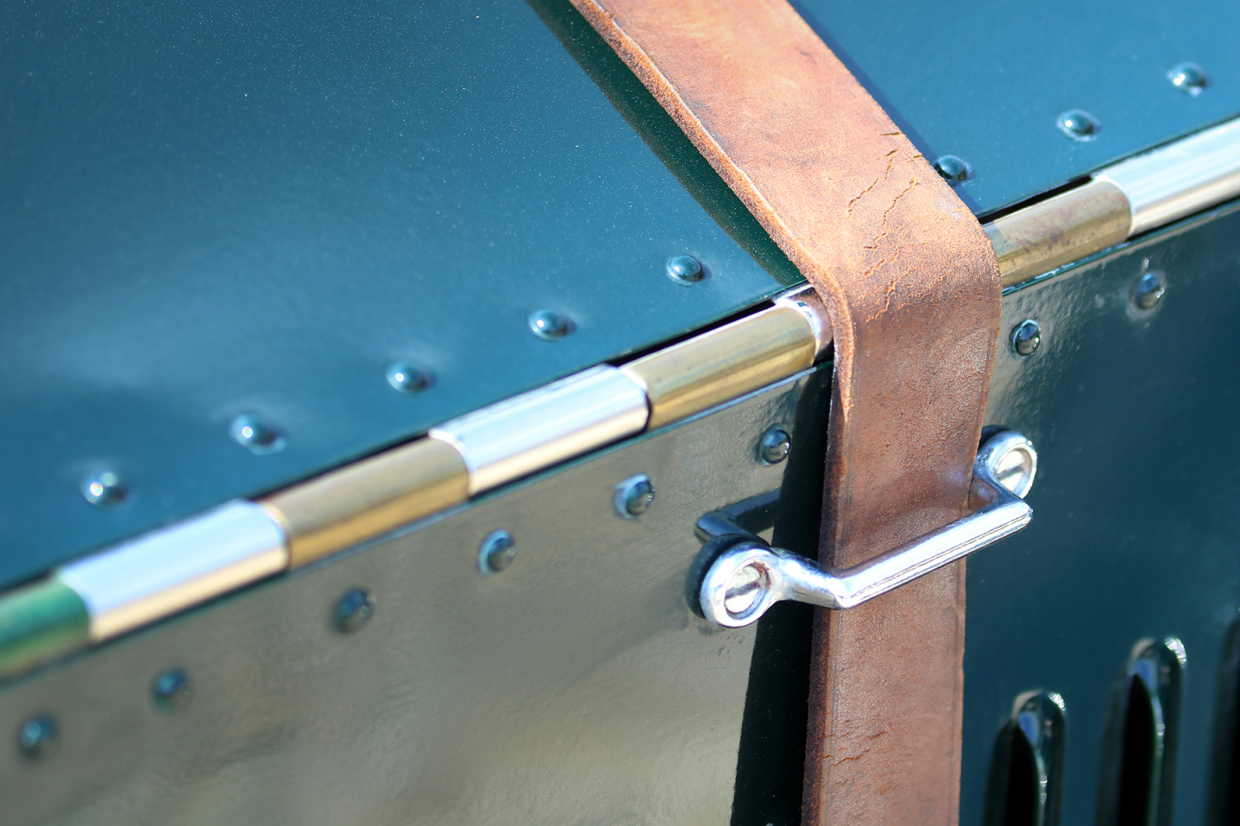
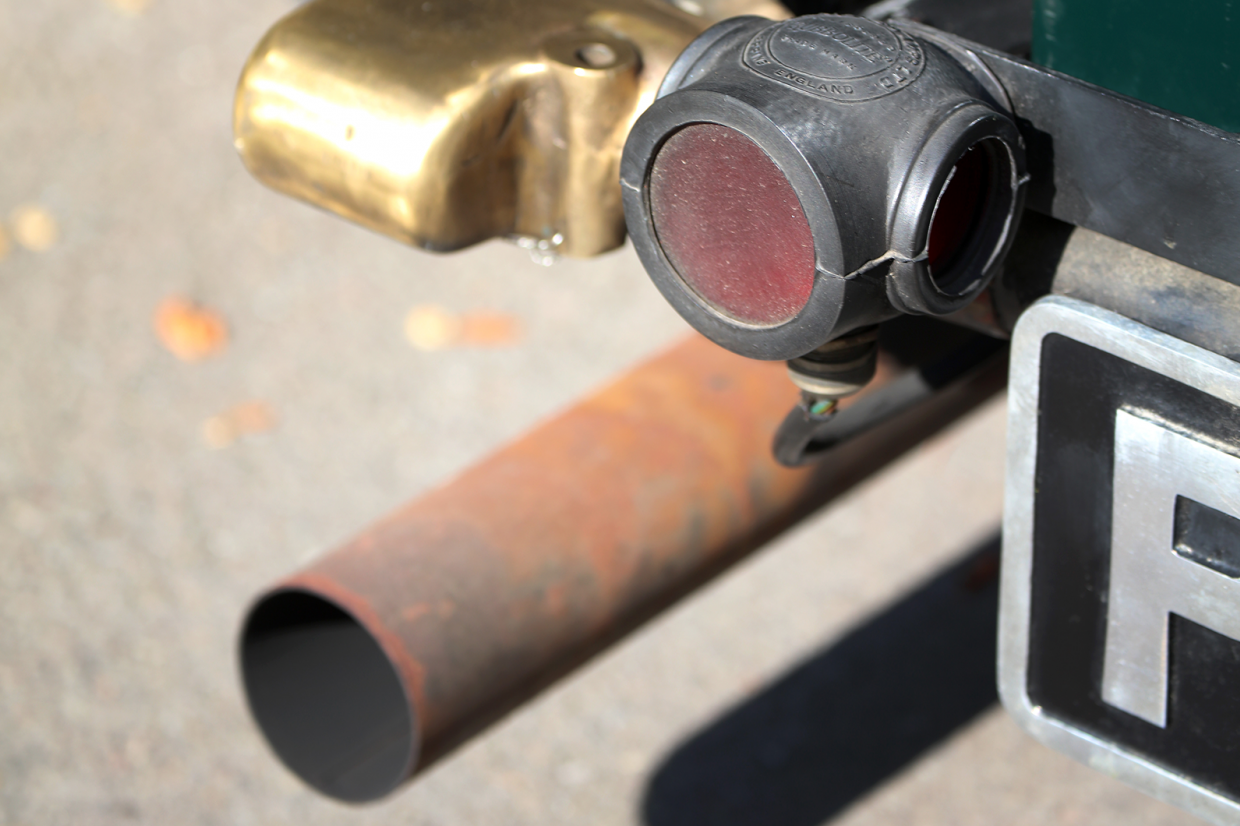
Already running behind schedule due to the tough conditions, and worried that the damage to the telegraph pole would result in more delays when discovered by the local authorities, the team made hasty repairs including sawing the rod-operated brakes to release the shoes and strapping the exhaust over the rear mudguard, to the discomfort of the rear passenger.
Classic & Sports Car – Driving Donald Healey’s Monte-winning Invicta Low Chassis

Healey then tested the Invicta and, to his relief, it proved to be drivable.

‘I had to compensate for the newly acquired rear-wheel steering by maintaining a degree of opposite-lock on the steering wheel,’ he later recalled.

Because Healey felt responsible to Macklin for the safety of the new car, and partly due to the challenging conditions, he then decided to drive most of the event.

Only on a few main roads during the daytime did he relinquish the wheel over the 2261-mile journey.
Classic & Sports Car – Driving Donald Healey’s Monte-winning Invicta Low Chassis

Despite these problems the S-type roared on, the tough, unsilenced Meadows ‘six’ sounding like a bomber as it stormed up the mountain roads.

‘We went all the way to Monte-Carlo in this condition,’ recalled Healey. ‘It was a lovely and memorable experience to climb over the Alps, drive down into the beautiful early morning sunshine of the Riviera, and along into Monte-Carlo for the finish.’

Amazingly, after the lengthy delay from the crash, the team still made the finish without penalties, and despite the fatigue Healey felt confident about the final, deciding wiggle-woggle test.

The rear drums were slackened off with a plan to brake only in a straight line.
Classic & Sports Car – Driving Donald Healey’s Monte-winning Invicta Low Chassis

The Invicta roared away, with Pearce timing the challenge. The practice runs on the deserted road back in Cornwall paid off and Healey gave the test his all.

“You’ve done a good time,” reported Pearce in the finishers’ enclosure, but Healey was too tired and headed for bed.

After four nights in the car and still dosed-up on caffeine, he struggled to sleep before a loud banging at the door stirred him.

Pearce rushed into the room with the surprise news that they had won overall. To cap their feat, Healey also dominated the Mont des Mules hillclimb, the climax of rally week.
Classic & Sports Car – Driving Donald Healey’s Monte-winning Invicta Low Chassis

Among his remarkable achievements, Healey rated winning the Monte the fulfilment of one of his greatest ambitions and he was determined to celebrate.

He immediately phoned his wife with the news and demanded she come out to join the jubilant party in Monte-Carlo.

Unfortunately, Ivy didn’t have a passport, but a direct request to the Home Secretary led to a special document being rushed through because it was such a prestigious British success.

Ivy made it to the Riviera Principality in time to attend the prizegiving at the palace, hosted by the Prince.

Much to the chagrin of the French organisers, the tough event had been dominated by English enthusiasts with some 62 classified.

Joining Healey in the celebrations was Victor Leverett, who’d also started from Stavanger in his white Riley Monaco and won the 1100cc class.
Classic & Sports Car – Driving Donald Healey’s Monte-winning Invicta Low Chassis

Despite his reservations about the handling of the S-type, Healey continued to campaign them across Europe in the toughest events with impressive results.

A second Invicta, chassis S73 and nicknamed ‘Rollerskate’ with uprated 100mph tuning, was entered in the 1931 Alpine Trial where he won a GlacierCup and set fastest time up the Galibier hillclimb.

Registered PL 9662, S73 was driven extensively by Healey including a second attempt at the Monte in 1932.

Umeå in Sweden was chosen for the starting point, where the weather was even more extreme. While the car was stored in an open shed, the temperature dropped so low it froze the axle and gearbox oil, requiring a local blacksmith to heat it up with a blowtorch.

The Invicta had a trouble-free run to second behind the Hotchkiss of Maurice Vasselle, but still won the Mont des Mules.
Classic & Sports Car – Driving Donald Healey’s Monte-winning Invicta Low Chassis

Healey was in his element powering the S-type up long mountain routes, and on the ’32 Alpine Trial he set a new 23 mins 44 secs record up the Stelvio Pass.

Holding on for dear life was Healey’s new navigator, a young journalist sent from Reuters called Ian Fleming.

The two bonded on the event and became good friends, and after WW2 when Healey was promoting his own marque in America they would often meet up on various transatlantic liners.

No doubt the experience on the Alpine Trial later inspired James Bond ’s car chases.
Classic & Sports Car – Driving Donald Healey’s Monte-winning Invicta Low Chassis

Healey’s final Invicta sortie on the Monte was again in ‘Rollerskate’ in 1933, this time starting from Tallinn in Estonia.

The event was a failure, with Healey forced to retire in Poland after avoiding a horse-drawn sleigh and ending up in a ditch where snow concealed a hefty kilometre stone.

The heavy impact smashed the front, including the radiator.
Classic & Sports Car – Driving Donald Healey’s Monte-winning Invicta Low Chassis

The Great Depression hit Invicta hard, and the exclusive S-type proved a slow seller – not helped by the bad publicity of ‘Sammy’ Davis’ alarming crash at the 1931 Brooklands Easter Meeting.

Macklin had one last try with a more affordable model using a 1498cc Blackburne engine, which Healey drove on the Belfast Rally.

Even with a blower it was underpowered and uncompetitive, so in early 1933 Healey joined Riley.

Healey remained good friends with Macklin, however, and always fondly remembered the rakish S-type and his rally success. The formula of seductive looks, tough design and powerful straight-six engine would later return in his own sports cars, which also proved to be mighty rally weapons in the Alps, but never won the Monte.
Classic & Sports Car – Driving Donald Healey’s Monte-winning Invicta Low Chassis

The rugged quality of the S-type is confirmed by the survival rate.

Of the 75 built – 64 at the factory and further 11 at Invicta’s Chelsea service depot – an amazing 68 survive, including both of Healey’s Monte-Carlo entries.

The 1931 winner was loaned to Motor Sport after the event to prove that it was running to production specification, and featured in the March 1931 issue.

The road tester was hugely impressed by the ‘frolicsome’ S-type, which combined ‘the handiness and pep so desired by a sporting motorist with toughness and reliability’.

The experience was one of those ‘lucky days’, and the journalist couldn’t resist putting various drivers in their place ‘who thought they were getting off the mark rather well’.
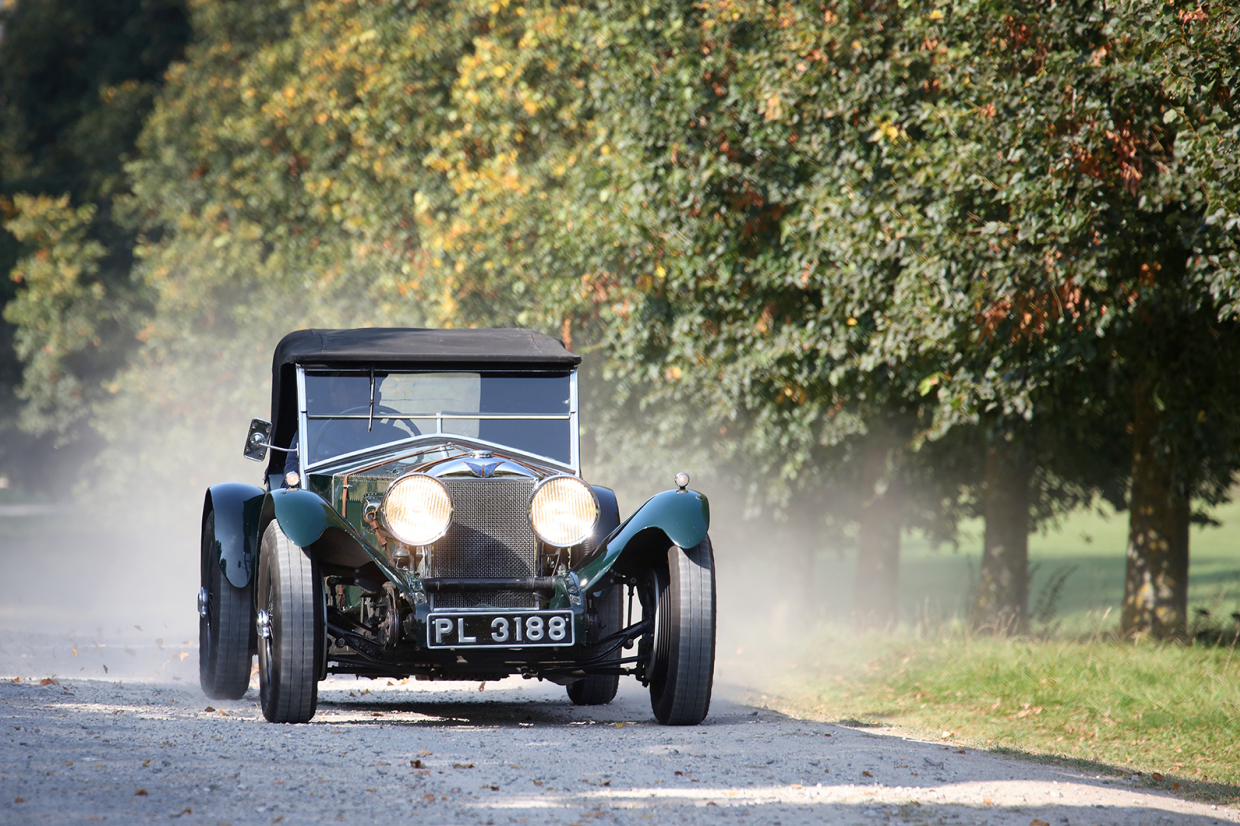
Classic & Sports Car – Driving Donald Healey’s Monte-winning Invicta Low Chassis

Within a few miles, the tester was feeling confident enough to ‘chuck it about without difficulty’ and found the Marles steering amazingly light.

Despite the car’s tough Monte usage, the tatty S-type’s pace was stunning: ‘By merely stepping on the loud pedal the car steams off the mark without a murmur and in a few seconds is cruising at 60mph with practically no throttle opening.

‘It’s the smoothest and most flexible six-cylinder engine we’re ever known fitted to a sports car.

‘The dual quality of silent speed and flexibility in addition to crashing acceleration when needed makes this the sort of car that simply must be driven, even if there is nowhere to go.’
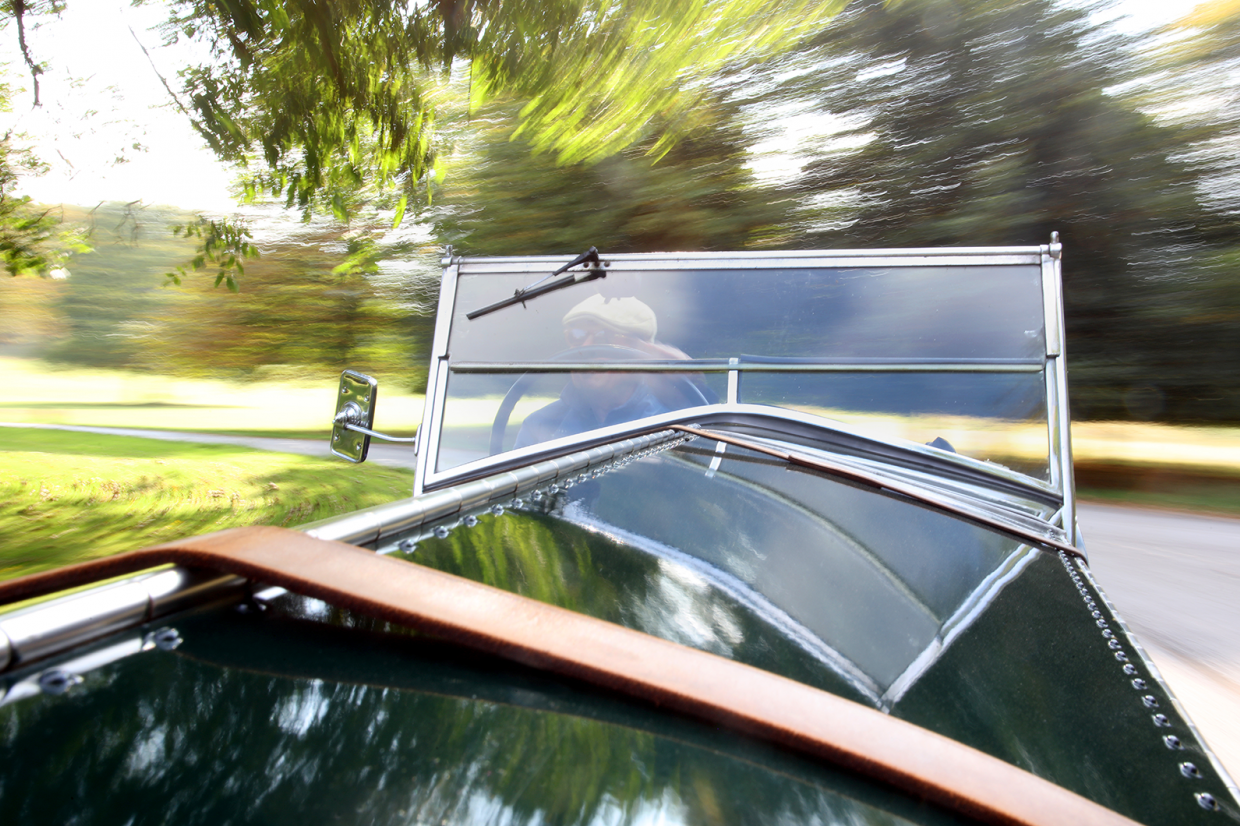
Classic & Sports Car – Driving Donald Healey’s Monte-winning Invicta Low Chassis

It’s easy to understand the author’s enthusiasm 90 years ago, roaring around Surrey suburbia to the Old Portsmouth Road where 90mph was exceeded, the Invicta ‘perfectly steady and held on course with absolute accuracy’.

Just imagine motoring along on a February morning in your little Singer Junior when the Monte-Carlo winning Invicta roars past.

Such performance was rare in a road car at the dawn of the ’30s, as exponents such as Healey and later Raymond Mays in S35 confirmed in competition.

With a price-tag of £750 for the chassis only, it was an exclusive machine.

Classic & Sports Car – Driving Donald Healey’s Monte-winning Invicta Low Chassis

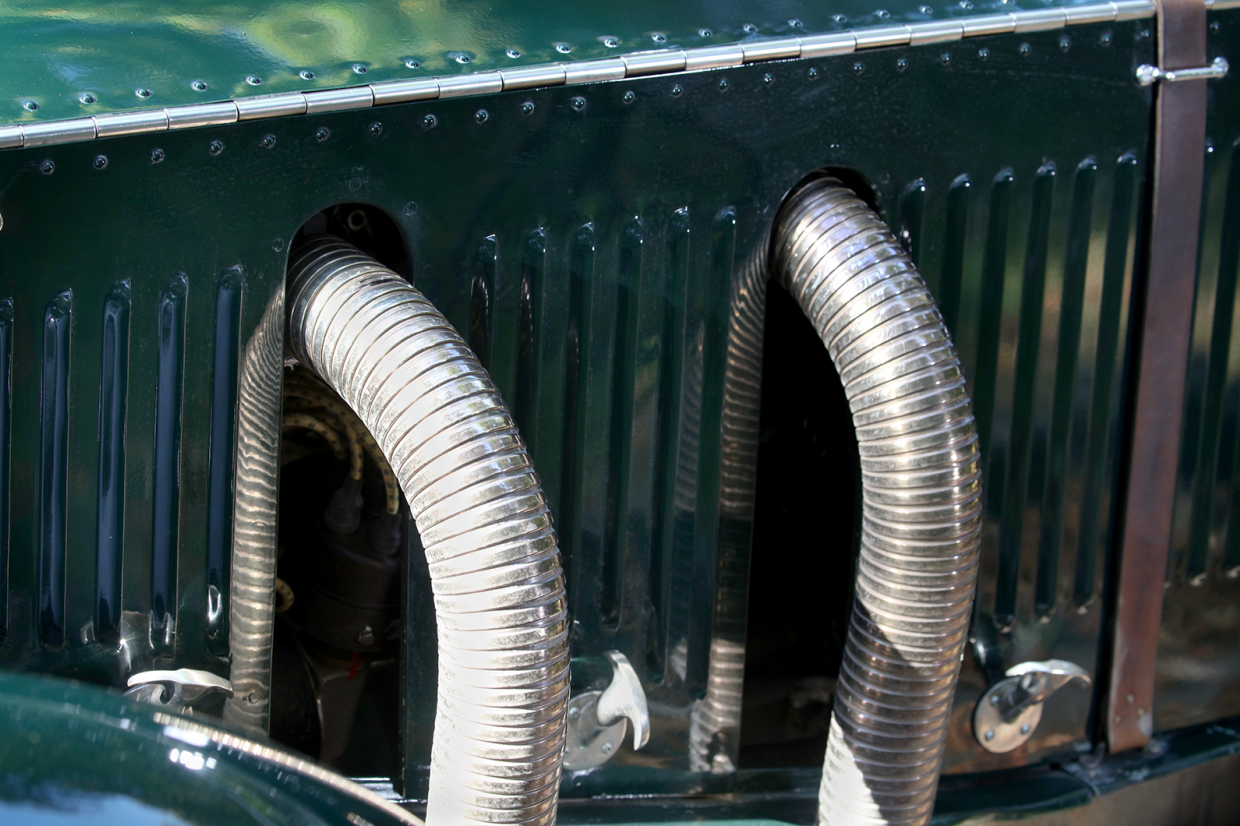
After its victory in Monaco, S48 was smartened up with an all-metal Carbodies-style rear, new wings and Healey’s distinctive cooling vents on the scuttle removed.

The famous car’s identity was later partially masked by a new registration, GUR 624, before it ended up in Australia.

The S-type eventually returned to England thanks to Invicta specialist Derek Green of Cedar Classic Cars, and in the hands of Alain de Cadenet and Mark Knopfler has been raced enthusiastically including the 2004 Le Mans Classic and the Goodwood Revival.

It was also enjoyed on long trips across Europe – de Cadenet even took it down to Cornwall for a family holiday. To preserve its original Meadows engine, a new unit has been fitted.
Classic & Sports Car – Driving Donald Healey’s Monte-winning Invicta Low Chassis

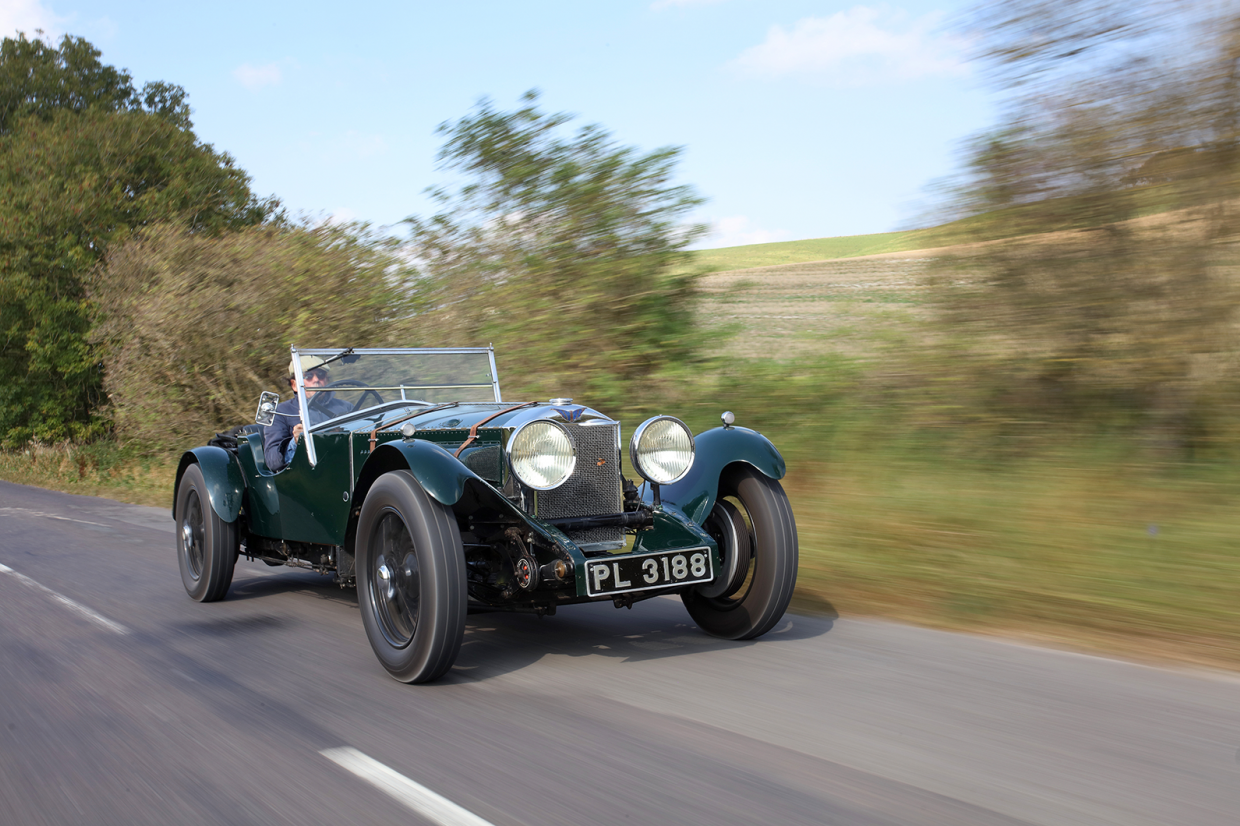
In a perfect world I’d love to have driven the Monte winner up the Mont des Mules, where Healey set the pace in 1931, but the scenic roads lacing the Wessex Downs where the car is now based with Will Stone is an evocative place to explore its dramatic vintage-style charms in late summer.

Today, S48 in detail doesn’t look much like the rally challenger, but climbing into this famous Invicta you can’t help thinking about the views Healey, Pearce and Symonds witnessed nine decades ago.

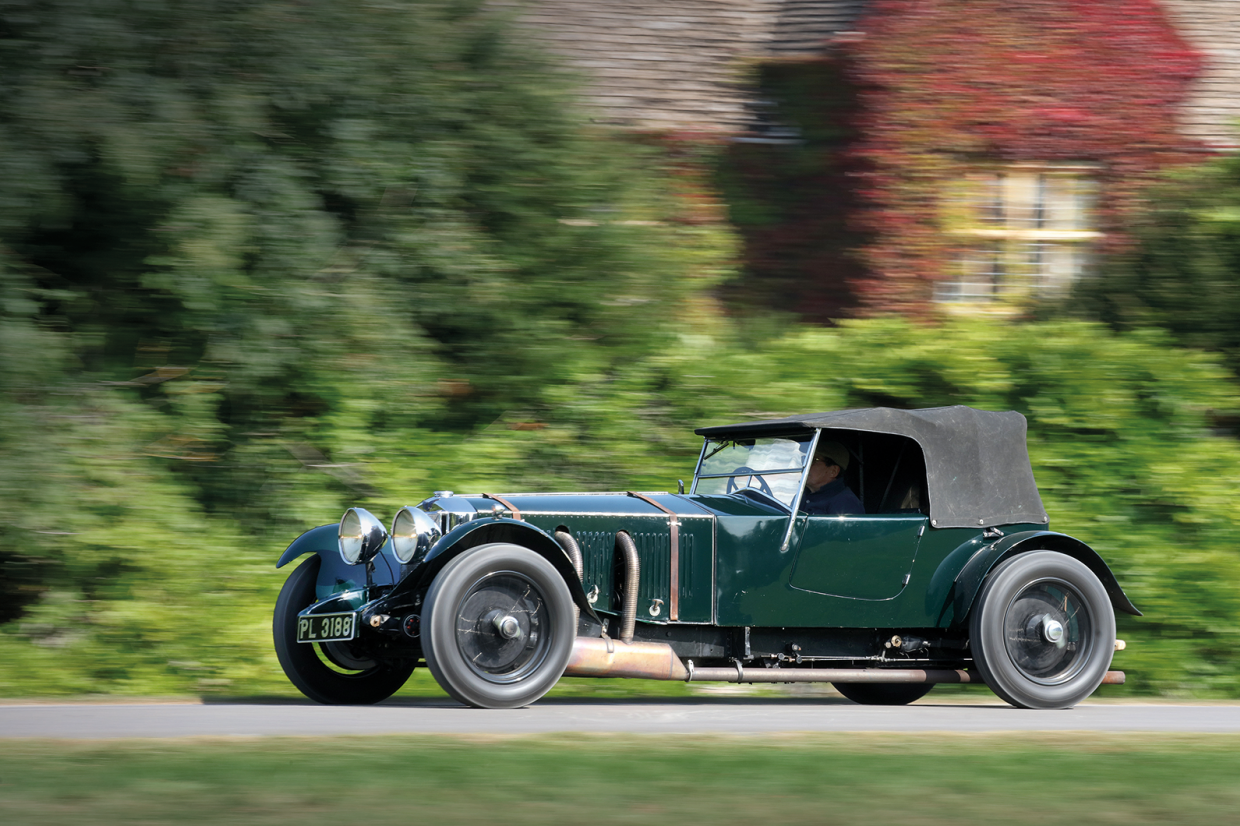
Since I was a kid the S-type’s low proportions and Mercedes-style outside flexi exhausts have enthralled me.

The profile, with the radiator set well back and the exposed fuel tank topped by huge-quick release filler, made it easy to doodle during boring school lessons.

To me the high windscreen spoils its sleek proportions, but folded flat or with roof erected it remains one of the most charismatic English sports cars.

With the underslung rear chassis inspired by Reid Railton’s designs for JG Parry-Thomas and Riley, the Carbodies coachwork and Vanden Plas ‘deluxe’ refinements were never improved upon, despite the attempts of Lancefield, Windovers and Corsica.
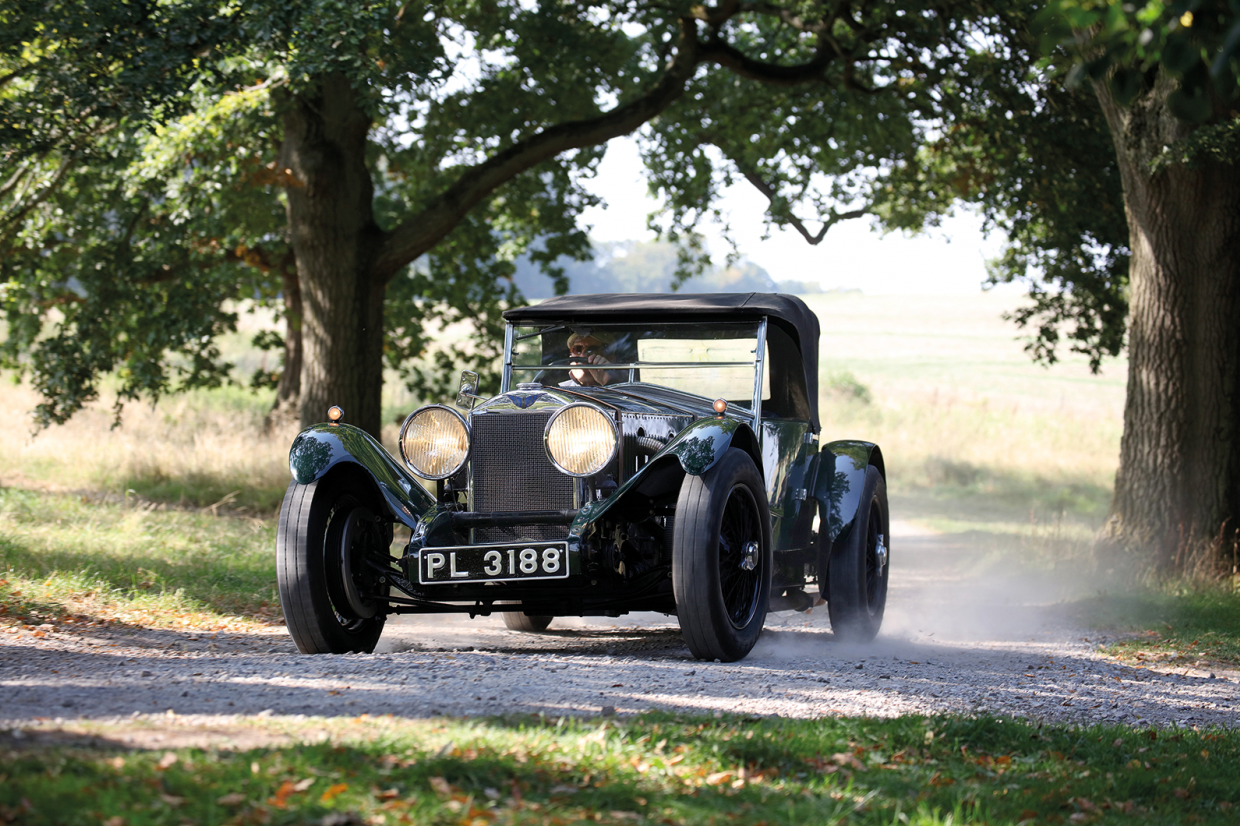
Classic & Sports Car – Driving Donald Healey’s Monte-winning Invicta Low Chassis

Out on the road the urgent low-down torque immediately impresses, with only third and top really required for rapid pace.

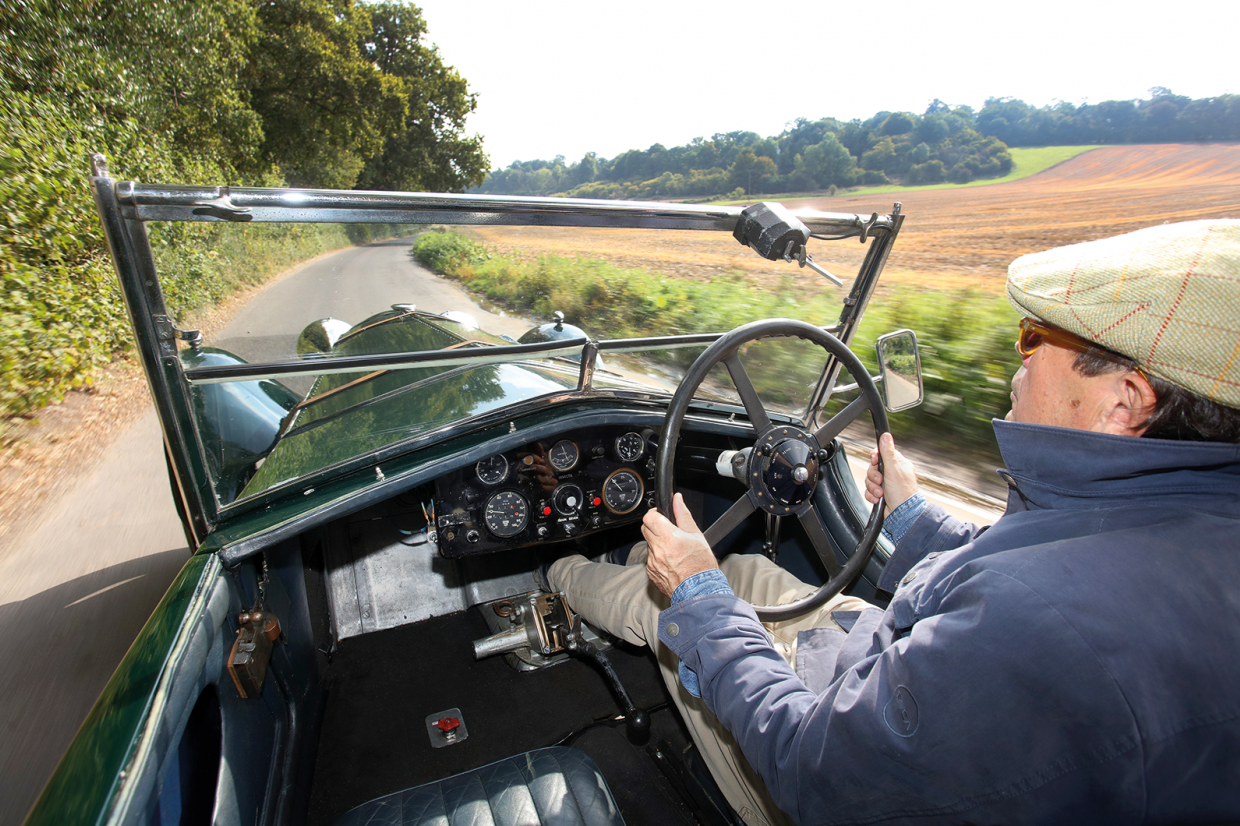
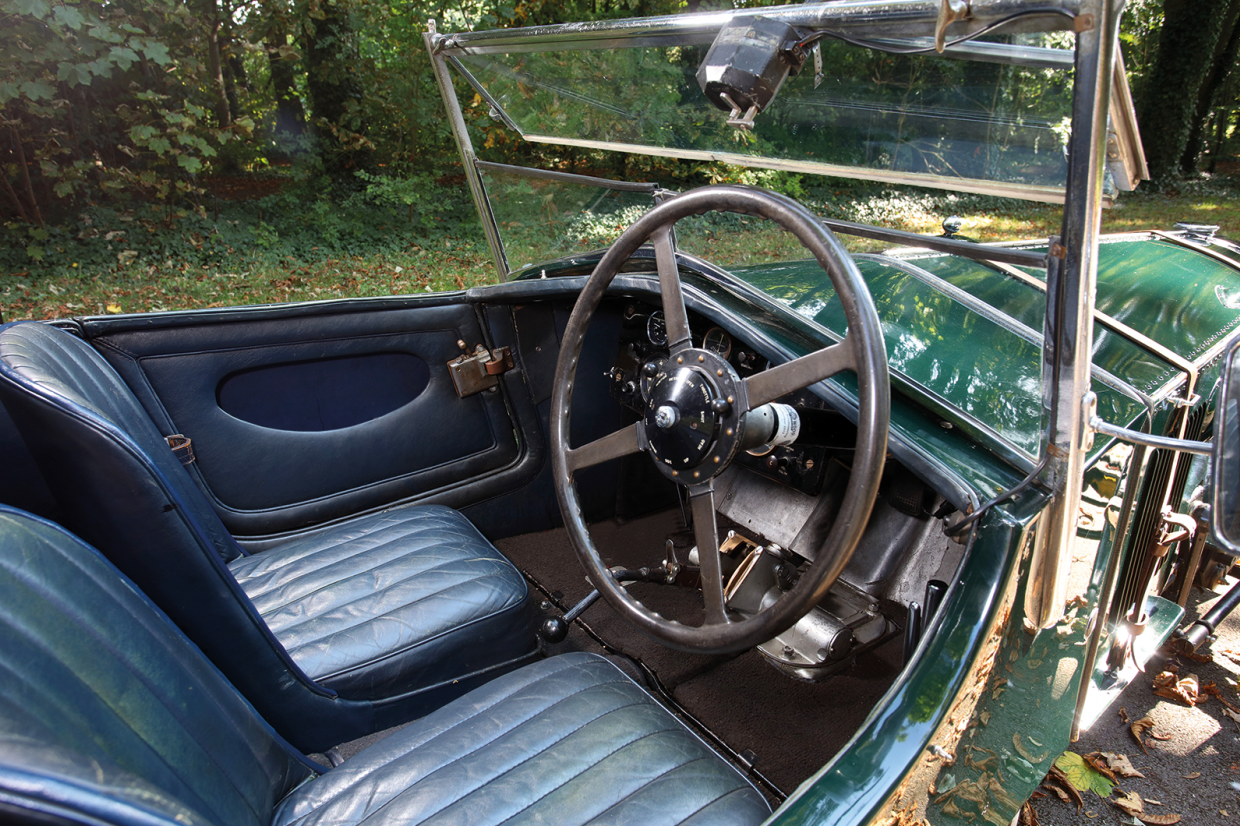
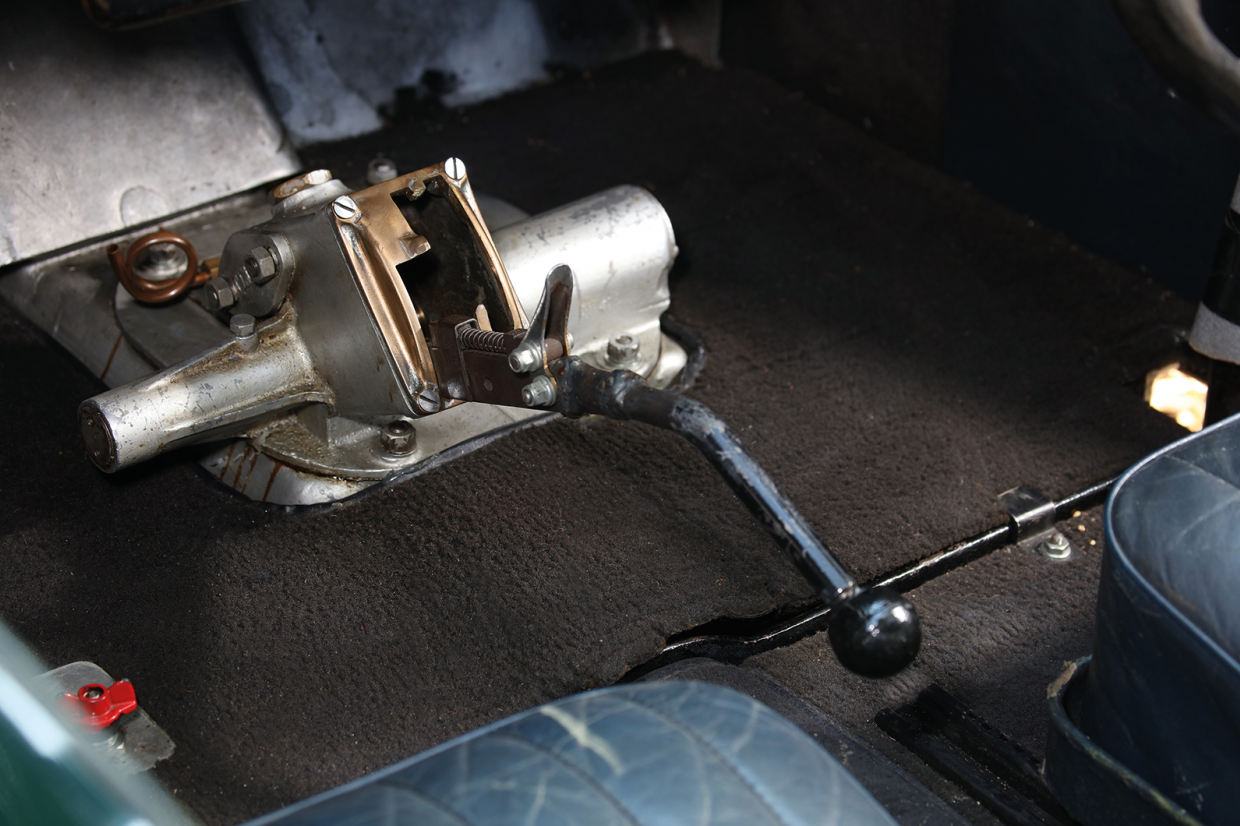
A unique feature of Healey’s Monte machine is the special central gearlever – a remote right-hand selector inside the bodywork was standard. The Cornishman preferred the sportier centre change, possibly due to an old right-arm injury from his WW1 flying accidents.

With hefty gears to take the torque of the meaty Meadows, the change feels chunky but slices through neatly with deft double-declutching up and down the ’box.

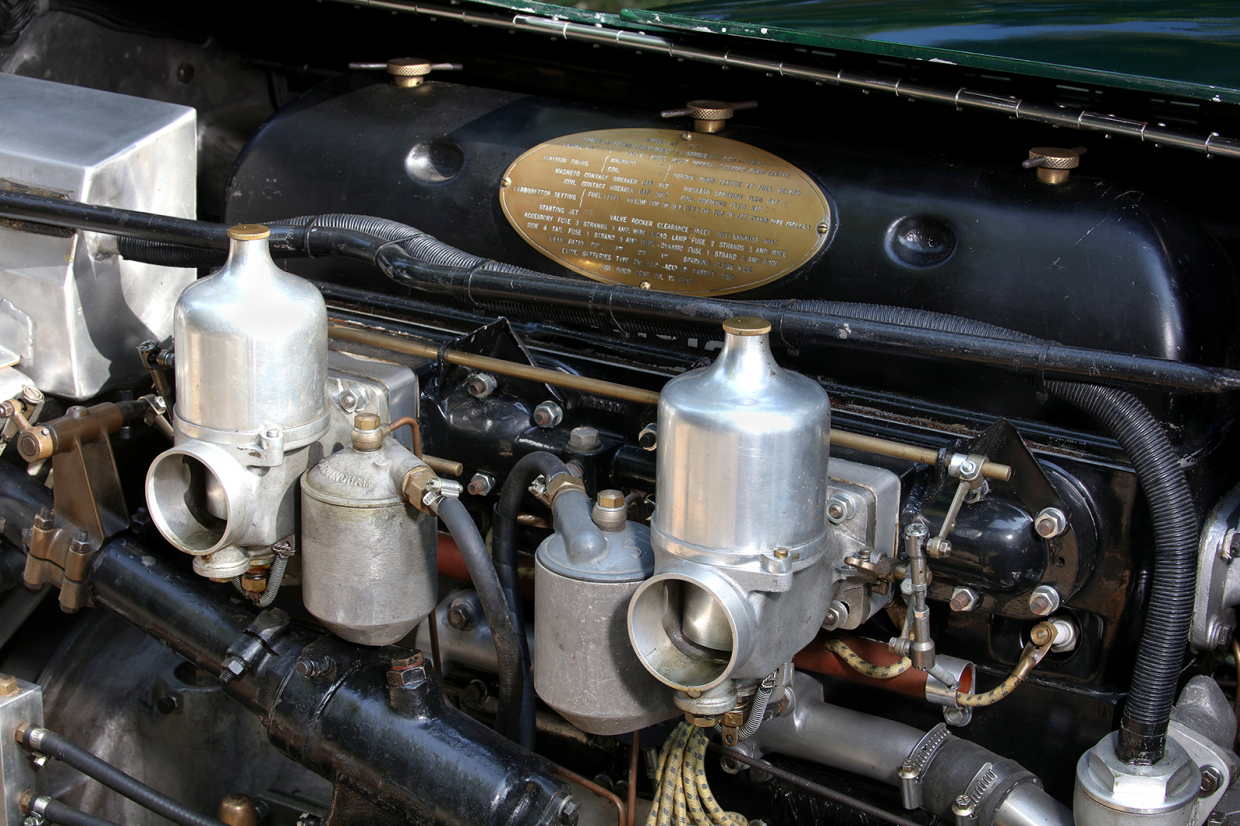
Over B-road bumps the S-type bounces around, the Hartford dampers too firm to cope with rough surfaces, but the precise steering action makes it easy to correct your course and thanks to the well-braced scuttle there’s little shake.
Classic & Sports Car – Driving Donald Healey’s Monte-winning Invicta Low Chassis

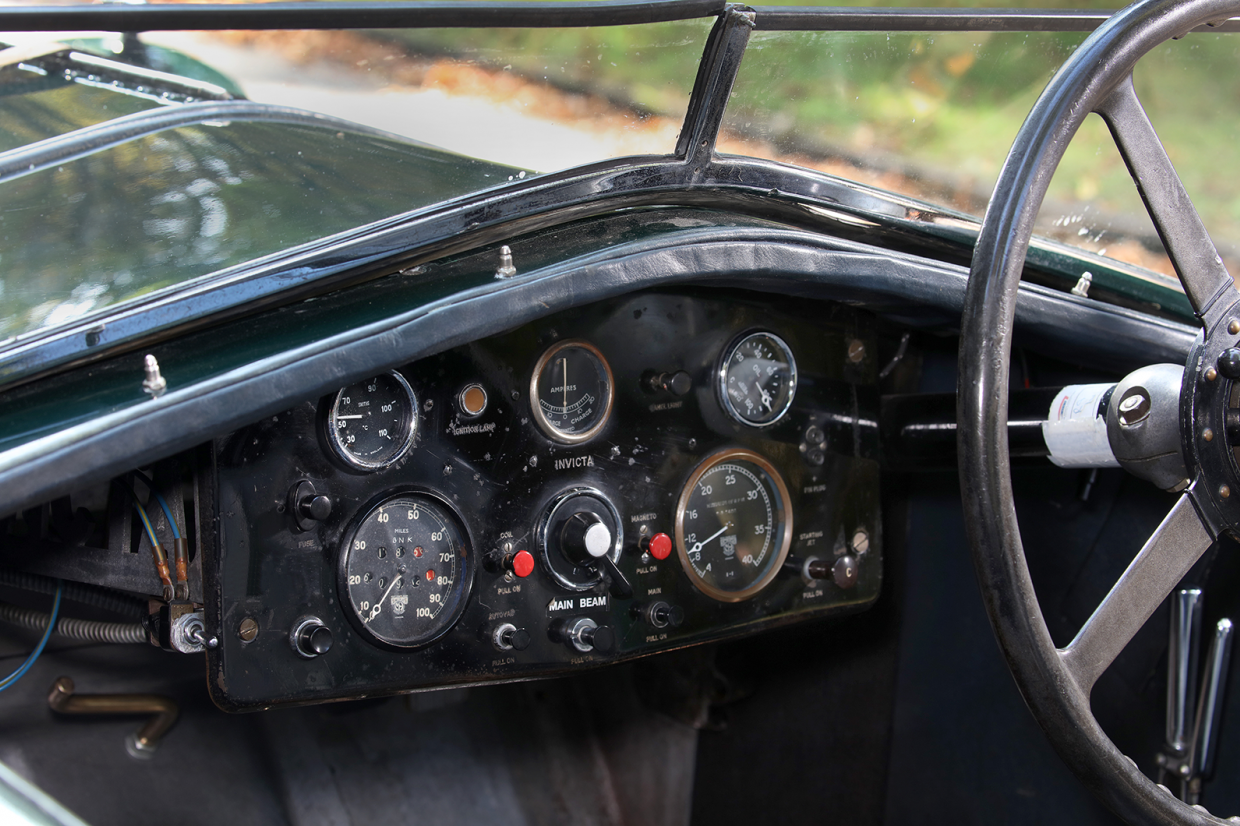
With twin-plug ignition (magneto and coil) the power is effortless, pulling this 1400kg charger in top at the legal limit, and with seating lower than most rivals it feels less vintage and faster than a Bentley Speed Six.

The tall, rod-operated drums pull up the Invicta straight and strong, the pedal giving plenty of feel.

A novel feature of the S-type was adjustable pedals with 5in travel to accommodate all heights of lucky, wealthy buyers.

Matching its impressive delivery, the 4½-litre is also marvellously tractable – as Stone has proved when borrowing it for the school run.

With sunlight glinting off the long bonnet, the burbling exhaust and the aroma of warm oil, it’s hard to imagine S48 roaring along deserted, snow-covered straights in the depths of winter.
Classic & Sports Car – Driving Donald Healey’s Monte-winning Invicta Low Chassis

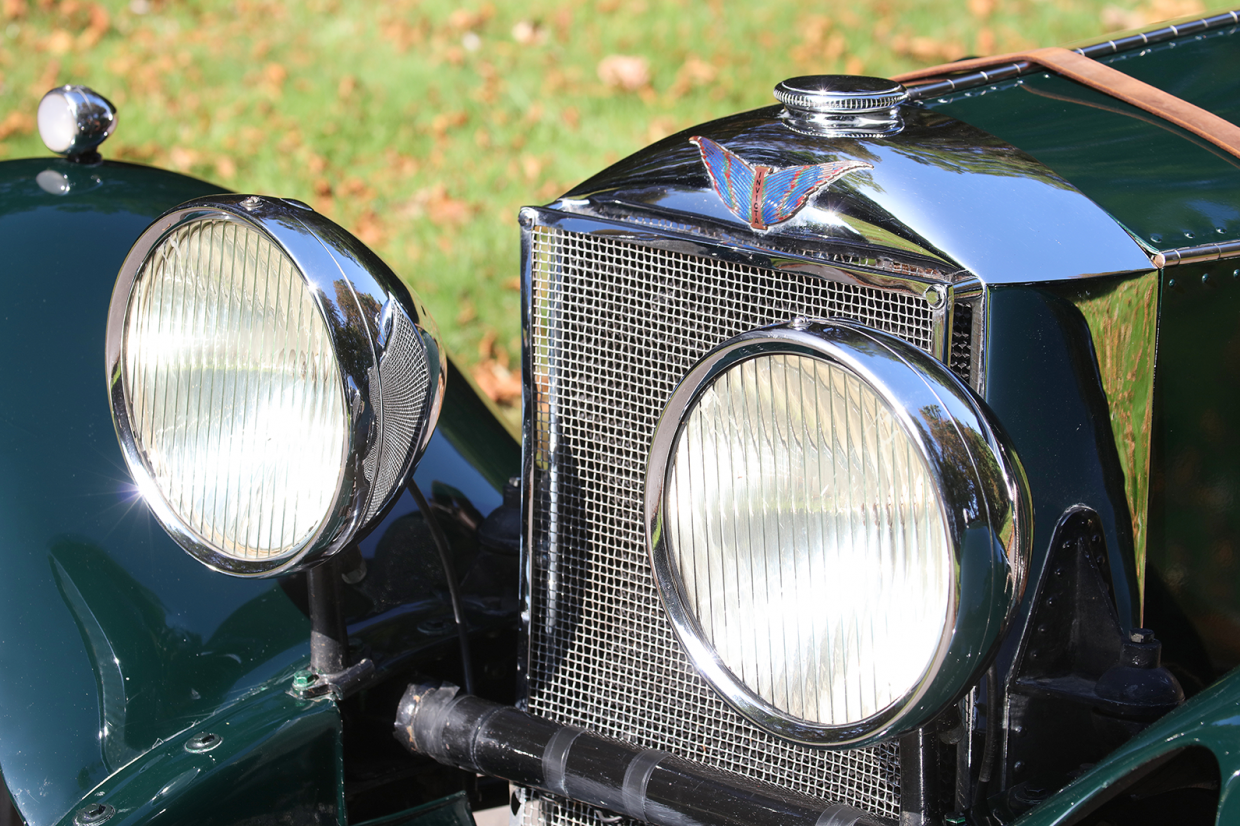
If I won the lottery, I’d restore it to the style of that Monte win with fabric body, nautical air vents, big headlights and that evocative ‘128’ rally plate between the dumb irons.

Then I’d ship it to Stavanger to mark the 90th anniversary of the Cornish legend’s achievement and retrace the victorious route to the Riviera.

Like Healey, I wouldn’t be able to resist some frozen-lake practice, but with values creeping towards £2m, this will remain firmly in my dreams.

Images: James Mann

Thanks to Will Stone


Monday, 4 May 2020

The Honourable Charles Stewart Rolls meets Sir Henry Royce. 4th May 1904 is the 116th Anniversary of their first meeting at the Midland Hotel, Manchester. This historic event is customarily celebrated by the CCC and the Secretary of the RREC Polish Section at the Hotel Bristol in Warsaw, Poland. The dreaded virus pandemic dictated a rather melancholic solitary celebration on 4th May 2020

My Shadow Badge Bar - a guessing game!

A solitary celebration on 4th May 2020

4th May 2020 - with a 'far-distanced' CCC member and photographer Błazej Żuławski  

The 'HRH'  ('His Royal Highness') registration indicates that this car once belonged to the Rolls-Royce fleet owned by the Sultan of Oman at Wargrave nr. Henley
I found it amusing to keep...but actually it is a Hull registration

For more on this interesting 1974 Silver Shadow SRH18723: 

https://casualcars.blogspot.com/2015/10/rolls-royce-silver-shadow-50th.html

May 4th again!

My sentimental celebration of the 116th anniversary meeting of Sir Charles Rolls and Sir Henry Royce at the Midland Hotel Manchester in 1904 rolls around again.

But today it falls in the middle of this ill-named  'Crown Virus' lock down. I am feeling desperately deprived. In a fit of optimism, this morning I rang the Hotel Bristol, hoping to celebrate this important day with a glass of champers as controls are mercifully slightly relaxed in Poland today. The hotel will be closed until June.....

And here I thought my gregariousness had overcome any obstacle!

No matter how carefully a project is planned, something may still go wrong with it.

The best laid schemes o' Mice an' Men,
Gang aft agley,
An' lea'e us nought but grief an' pain,
For promis'd joy!

[The best laid schemes of Mice and Men
oft go awry,
And leave us nothing but grief and pain,
For promised joy!]


Robert Burns, To a Mouse (Poem, November, 1785)

A few RREC members and CCC Members gather at the historic Bristol Hotel Warsaw for this convivial occasion. After Poland gained its independence in 1919, the famous pianist Ignacy Jan Paderewski became the Prime Minister and held the first session of his government at this hotel. By some miracle the Bristol survived the war with minor damage, standing isolated in the rubble of the destroyed city. 

We usually meet in the Secession style Column Bar (possibly designed by the noted Viennese architect Otto Wagner) for champagne and tapas in what was known in more glamorous times as 'the cocktail hour', 5.30pm - 7.00pm. 

This small Rolls-Royce club gathering has become almost an institution at the Bristol over the years. It was a pleasant occasion and I was particularly gratified as I used to celebrate the historic meeting alone. In the past, for some like company whilst sipping my flute of Deutz champagne, I would take along a few Rolls-Royce Bulletins and the Yearbook I had not had time to read. Anyone in those days entertaining the idea of the formation of a Polish Section of the RREC would have been considered a suitable case for treatment. Remarkably it has recently come to fruition.


I hope my bout of, yes, admittedly rather privileged nostalgia, for happier, more civilized days can be forgiven in view of the horrors besetting Europe and abroad - particularly those countries torn to shreds whose destinies rarely seem to reach our news bulletins - Yemen, Syria, Brazil, Ecuador, India and Africa....


Holding the magnificently laid out and informative
20-Ghost Club 70th anniversary commemorative book

Thank goodness I kept this record at least..... I shall be raising a glass on my terrace alone it seems which takes me back to the original way I celebrated this day....RR books, magazines and occasional fond glances at my parked Shadow, owned for 33 years.

Part of the Speech made by Sir Charles Rolls at the Dinner following the 1905 Tourist Trophy Race:

Mr. Royce is one of those unassuming, hard-working men who devote their lives to the study and solution of difficult mechanical problems, and to whom indirectly are due the general advancement of civilization and the high position which Great Britain holds at present in the engineering world.
*  *  *  *  *  *  *  *
My maternal grandfather was British by birth. His name was George Mason (b. 10 June 1895 in Liverpool) and he was a professional boxer. During the Great War he fought with the valiant Gordon Highlanders in the Battle of the Somme on the Western Front. He was wounded twice but returned to action on both occasions.

After the Armistice he tried to set up fitness centers in New York in the 1920s (way ahead of his time) but lost all his money in the Wall Street crash and unfortunate Australian investments. For some years he was then the Physical Education Instructor on Cunard liners to the Prince of Wales (King Edward VIII) and other dignitaries including his friend the explorer Sir Earnest Shackleton, the Oxford and Cambridge Olympic Track Teams, the notoriously erotic dancer and scandalous Maud Allan of Oscar Wilde Salome fame as well as coach to the American professional boxer Jack Dempsey. 

These luxurious liners crossed the Atlantic from Southampton to New York  (RMS Berengaria, RMS Mauretania, RMS Aquitania). They boxed across the Atlantic – in those days it was regarded as a ‘masculine’, fashionable and attractive way to exercise! Still is for some! Mason made a great deal of money coaching at this high level. At the time he was married to an English lady from Hampstead and they went on to settle in Australia.


George Mason (Rt.) sparring on the RMS Aquitania

During WW II he fought in the Australian Army in Papua New Guinea and contracted scrub typhus from which he never fully recovered. After the war worked profitably for Tattersall's  Club, a lottery and gambling organisation in Sydney and took to farming property at Penrith in New South Wales. He also part-owned the Apsley Arms Hotel in Walcha, a small town 425 kilometres by road from Sydney at the intersection of the Oxley Highway and Thunderbolts Way. 

During this time he owned the Rolls-Royce motor car 56WJ. I know little in detail about his period of ownership except he carried lambs in the rear compartment at times! Ill health precipitated the sale of the car to a mysterious Punjabi Mr. Doabi who was in the mining business. He carried heavy samples of rock for mineral testing, also in the rear compartment! Australian Rolls-Royce motor cars often experienced a tough life.


This is the 1929 Phantom II, chassis no. 56WJ with Thrupp & Maberly landaulette de ville coachwork. It arrived in Australia in 1936 and was owned in Sydney by Dr Hugh Poate. My grandfather was the second Australian owner, acquiring 56WJ in 1950 and registered in NSW AP-112. It appears he bought the car from Dr Poate and perhaps ran the car  for six years, possibly just a little less. In their book Rolls-Royce and Bentley in the Sunburnt Country: The First Fifty Years of Rolls-Royce in Australia (Tom Clarke & David Neely), they recorded it as last noted in Tasmania in the 1970s. He is sure this car used to have a de ville front portion (now sealed), and the rear landaulette portion was also sealed.

56WJ is illustrated in two photographs on p. 192 of Rolls-Royce : The Derby Phantoms by Lawrence Dalton and was displayed at the Scottish Motor Show of 1929. The first owner was Sir Howard Bowdon. He was the son of the international business tycoon Sir Frank Bowden, 1st Baronet. He was the chairman and chief executive of the world famous Raleigh Bicycle Company founded by his father from a tiny enterprise. Bicycling as exercise had saved his father's life - doctors had given him 6 months to live. He built a huge industrial enterprise from this experience. From 1930-34 he was Chairman of the British Olympic Association.  (Tom Clarke by email with thanks)


                        56 WJ at the 1929 Scottish Motor Show (The Derby Phantoms Dalton p.192)

                                                  56 WJ (The Derby Phantoms Dalton p.192)


20-Ghost Club visit to Poland June - July 2017

Some 20 Silver Ghosts (1911 - 1925), two 20 HPs (1927 and 1928), a Phantom I (1931), five Phantom IIs (1930-1933), one 20/25 (1934), one 25/30 (1937) and a Range Rover support vehicle took part at various stages of the tour.  Such a large group of pre-war Rolls-Royce cars visiting Poland was completely unprecedented in the history of the country  and was covered enthusiastically by television and other media.

The tour started on Sunday on 24 June 2018 and was of two or three weeks duration depending which option was chosen. The total distance was approximately 1,100 miles (980 miles to 1,420 miles, depending on options chosen and excursions taken). First the great city of Gdańsk. The cars were collected from Gdynia Docks followed by a full visit to the Hanseatic Baltic town. The next halt was a visit to the monumental Teutonic Castle of Marienburg (now Malbork) and another Teutonic Castle at Kwidzyn. They then drove to Warsaw along the Vistula River, stopping  at Płock which has the finest view of the Vistula River from the escarpment.

In Warsaw, accompanied by Frank Tiemann, Head of Corporate Communications Europe (East) and CIS for Rolls-Royce Motor Cars, I welcomed them with a glass of champagne and a refreshing towel at the door of the Victoria Sofitel Hotel. We had dinner together twice on consecutive nights and I gave a short talk on important sights to see in Warsaw. A modern Rolls-Royce Ghost supplied by the Polish distributor then joined the group for some six days driven by the photographer Błazej Zuławski. 

The next day they pressed on to Kraków and the wonders of the Wieliczka Salt Mine. Then the Tatra Mountains with visit to Niedzica Castle,  Auschwitz-Birkenau (the Centre for Peace & Reconciliation) and historic Tynieuc Abbey.  Forever onward to Niemcza in the Sudeten Mountains of Lower Silesia and  Świdnica to see the stunning  polychrome 17th century Lutheran wooden church. Near here at Gola Dzierżoniowska they were joined for dinner  by the Chairman of the Polish Section Dariusz Brudkiewicz in his 1948 Silver Wraith. The former 14th century synagogue at Strzegom and Książ Castle (sometime home of the Englishwoman Daisy von Pless whose published diaries are remarkable) near the mining town of Walbrzych were also of great interest. Barbeque and folk dancing and music at the Renaissance Palace at Kamienna Góra. Hardy climbers reached the 14th century Chojnik Castle located high above the town of Sobieszów on top of the Chojnik Hill within the Karkonosze National Park, overlooking the magnificent Jelenia Góra Valley.

All the members of the 20-Ghost Club assured me of their surprise at the historical fascination of Poland and its extraordinary modern development over the last thirty years.

I was even subsequently elected a 20-Ghost Club Club member - a rare honour as I do not own a Silver Ghost, merely a humble 1974 Silver Shadow - but it is still a Rolls-Royce and I am Secretary of the Polish Section of the Rolls-Royce Enthusiasts' Club!


And then the great 70th Anniversary 20-Ghost Club Dinner and Annual General Meeting on March 6th 2020 at  the indescribably opulent Goldsmiths' Hall London. 


A most attractive extremely high quality Menu had been prepared of Marinated Salmon, followed by aged Fillet of Beef, then Orchard Apple Tart Tartin with Bay Leaf Ice-Cream and Caramel Sauce with coffee. Excellent wines from Italy and Spain. Grace was said, a Loyal Toast, Toast to the Royal Family and a Toast to the Hon. Charles Rolls and Sir Henry Royce were pleasantly scattered through the dinner.


Rolls-Royce Silver Ghost in full flight


Sir Michael Kadoorie explaining his saving of  the priceless 1907 Silver Ghost 'AX 201' for the nation following a seamless, Rolls-Royce smooth, Annual
 General Meeting


Real candles by the hundreds lit these candelabra - an extraordinary experience!


MM 20 Ghost Club Dinner

4th May  2016

Together with the Chairman of the newly formed Polish Section of the RREC, Dariusz Brudkiewicz who had driven from Opole with his family, some stalwart CCC members assembled (Ian Booth, Michael Kenny, Blazej Zulawski, and a 'new chum' Max Filipowicz and the ever ebullient Michael Kenny). 


          When Rolls Met Royce 

Wednesday 4th May 2016 marked 112 years to the day since Frederick Henry Royce, who owned an electrical and mechanical business, met Charles Stewart Rolls, who ran a car company in London.

Rolls and Royce met at the Midland Hotel in Manchester on 4 May 1904 to discuss a proposed partnership. Royce had just built his first motor car and the pair reached an agreement over lunch to manufacture vehicles to be sold under the name Rolls-Royce.


Midland Hotel Manchester shortly after completion in 1903 not long before Rolls and Royce met there

The first Rolls-Royce car, the 10hp, was unveiled at the Paris Salon in December 1904. Two years later saw the formation of the Rolls-Royce Company.

After considering sites in Manchester, Coventry, Bradford and Leicester, Derby's council offered the company cheap electricity on a site on the southern edge of the city and the rest, as they say, is history… (Courtesy of Flying Spares)
As Rolls-Royce remains one of the greatest brand names and industrial British Institutions (despite changes of ownership) I always celebrate this meeting of the founders every year. Well someone in Dam Buster spirit has to fly the flag after all, even an Australian living in Poland!

I headed up to the historic Bristol Hotel in Central Warsaw near the Presidential Palace, the CCC base of operations. 

We had numerous glasses of Deutz Champagne, tasty snacks provided by the hotel, excellent Tapas and chatted about cars, leafed through some of the past Rolls-Royce Enthusiasts' Club Bulletins and RR books. It has become an annual commemorative ritual.

Most important much politically incorrect banter was in evidence and we laughed a lot...yes, a lot....

1927 Royce‘Twenty’ (GXL80) with coachwork by Simpson and Slater of Nottingham
Garden Atrium of the Hotel Bristol, Warsaw 4th May 2017


4th May 2016

                              
                                      My 20 year badge from the Rolls-Royce Enthusiasts' Club
    

More May 4ths from the CCC past ...


and

                           
Driving in Poland is not so restricted as in the UK
MM in an industrial mask with upholstery-matching apple-green filter and elastic brackets 

At the wheel of his 1949 MG TC

Toodle pip!
Michael Moran